
Boeing Korea President Will Schaefer: “AI and Autonomous Flight Will Fundamentally Transform the Aerospace Industry”
- 2026-11-25
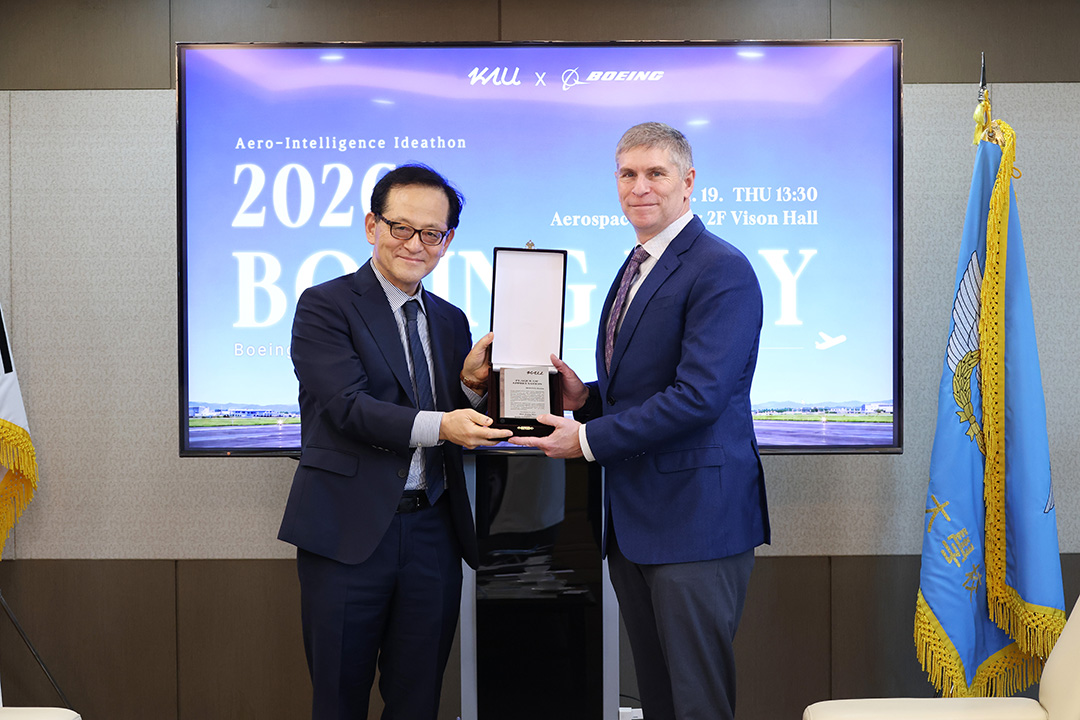
“Artificial intelligence and autonomous flight technologies will fundamentally transform the aerospace industry.”
Will Schaefer, President of Boeing Korea (right in the photo above), made this assertion in a written interview with our university. Changes in the aerospace industry are already becoming evident across various areas. Boeing is expanding the adoption of AI across engineering, manufacturing, supply chains, and safety, applying the technology to areas such as intelligent production and visual inspection on manufacturing floors. In aircraft maintenance, AI-powered predictive maintenance, which analyzes flight data and maintenance records to detect component abnormalities before failures occur, is becoming a key operational practice.
President Schaefer explained that the engineering capabilities of the Boeing Korea Engineering and Technology Center (BKETC) in Seoul are accelerating the development and integration of these technologies. The theme of the 2026 Boeing Day competition, held on November 19, where he delivered a special lecture, was also “Aero Intelligence Ideathon.” The event challenged students to use generative AI as a collaborative development partner to solve problems in aviation safety, flight operations, maintenance, airports, and space.
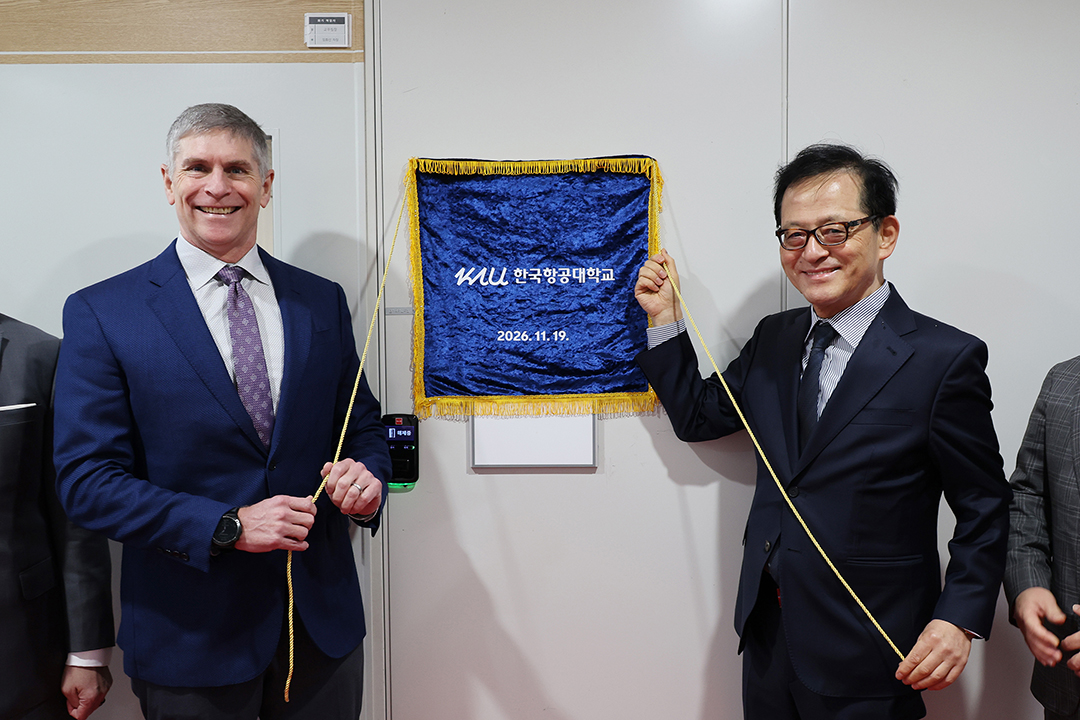
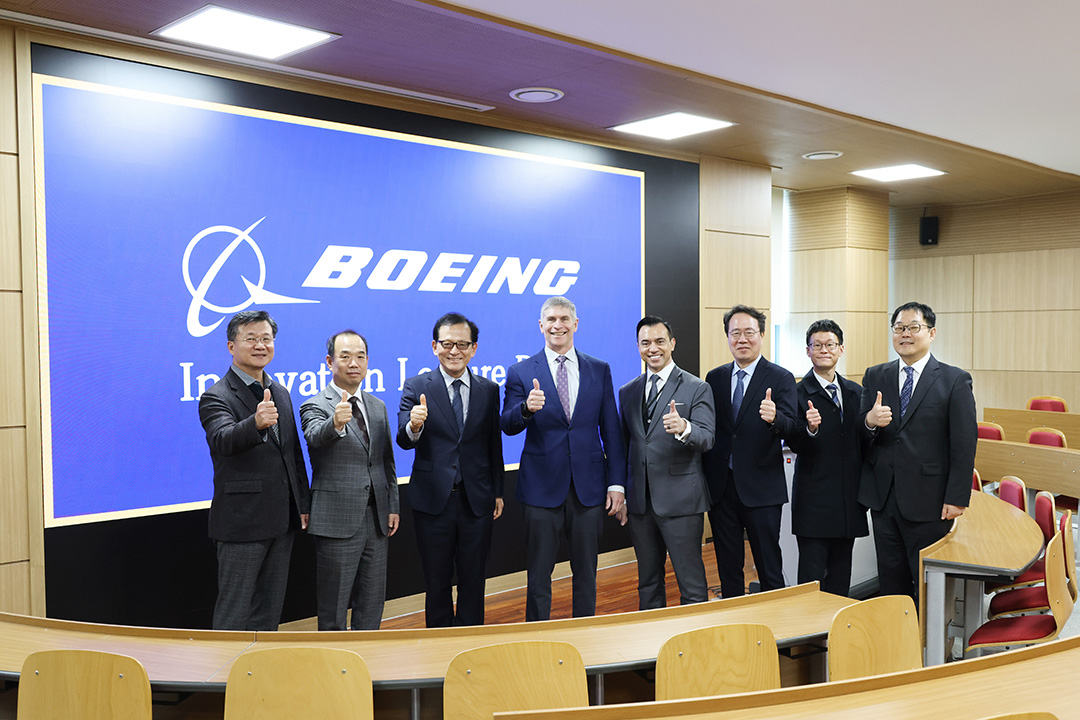
After serving as a P-3 pilot in the U.S. Navy, President Schaefer worked in supply chain and procurement at Boeing before taking leadership roles at Boeing Japan and Boeing Korea. In recognition of Boeing Korea's 13 years of support for Boeing Day and its scholarship contributions, our university named Lecture Hall 106 the “Boeing Innovation Classroom.” President Heo Hee-young personally presented President Schaefer with a plaque of appreciation. The following is a Q&A summary of the written interview with President Schaefer.
Q. What do you consider the most important changes that will reshape the aerospace industry over the next 10 years, and what significance does cooperation with Korea, including BKETC, hold?
A. Artificial intelligence and autonomous flight technologies will fundamentally transform the aerospace industry. Boeing highly values the leadership Korea has demonstrated in these fields. The outstanding engineering capabilities of the Boeing Korea Engineering and Technology Center (BKETC) are also accelerating the development and integration of these technologies, contributing to Boeing's position as a global technology leader.
* Boeing Korea Engineering and Technology Center (BKETC)
BKETC is a research hub established by Boeing in 2019 at the ASEM Tower in Gangnam-gu, Seoul. It focuses on strategic technology research in areas such as autonomous flight, artificial intelligence, avionics, and smart factories. Its major research fields currently include software engineering, AI, avionics, electronics and displays, data solutions, and digital engineering. According to Boeing, approximately 110 engineers currently work at the center.
Q. How does Boeing identify new markets, and what position does the Korean market hold within that strategy?
A. Every market has its own unique characteristics, but Boeing's mission to connect, protect, and explore our world and beyond remains unchanged. Korea is an important market and a country at the forefront of innovation. Korea ranked fourth globally and first in Asia in the World Intellectual Property Organization's (WIPO) 2025 Global Innovation Index. With world-class R&D talent and ambitious defense export goals, Korea is one of Boeing's key partners in the future aerospace industry.
Q. Boeing and our university have jointly held Boeing Day since 2014, and this year marks the 13th edition. Why has Boeing continued its talent development program with one university for such a long time?
A. Supporting and nurturing the next generation of aerospace talent is an area I am passionate about. Boeing Day puts this commitment into practice by expanding access to aviation and STEM education in communities across different regions. I am honored that Boeing Day has become one of Korea Aerospace University's signature annual programs and is contributing to the development of the next generation of industry leaders.
Q. Have students' ideas presented at Boeing Day inspired Boeing's business activities or research?
A. Absolutely. Boeing Day inspires not only students but also Boeing employees. Various Boeing teams welcome students' creative ideas, discover new perspectives through them, and sometimes find opportunities to drive innovation in the diverse initiatives we pursue.
Q. What strengths have you observed among our university's students through Boeing Day?
A. I believe the greatest strengths of Korea Aerospace University students are their creativity and innovative thinking. I encourage them to dream big and push beyond their limits. As Charles Lindbergh, the pilot and inventor, once said, “It is only those who dare to fly who can endure to the end.”
Q. What capabilities are most important for students seeking careers in the aerospace industry, and what experiences should they pursue during their university years?
A. I believe curiosity, resilience, collaboration, and a sense of ownership in one's work are essential. Students should seek opportunities to participate in hands-on projects, engage in meaningful teamwork, and continue learning. These experiences are aligned with Boeing's values and will help prepare them for success in the aerospace field.

76, Hanggongdaehak-ro, Deogyang-gu, Goyang-si, Gyeonggi-do, 10540, Korea
Phone - +82-2-300-0114 FAX - +82-2-3158-5769 E-mail - webmaster@kau.ac.kr
COPYRIGHT 2022 Korea Aerospace University. All right reserved.