
Exploring the Frontiers of U.S. Aerospace Innovation
- 2026-02-09
The 2025 NASA–BOEING Exploration Program Successfully Concluded
The 2025 NASA–BOEING Exploration Program, designed to explore the forefront of aerospace innovation in the United States, was successfully held from January 12 to 16. Organized annually by the Office of International Affairs during the winter break, the program aims to broaden students’ understanding of global corporations and institutions while nurturing future global leaders. This year’s program offered students a rare and meaningful opportunity to experience the aerospace industry firsthand.
A total of 40 students participated, including 27 students selected by the Office of International Affairs and 13 team leaders and award recipients from the 2025 BOEING DAY program.
The itinerary included visits to the University of Houston and NASA Johnson Space Center in Houston, Texas, as well as the Boeing Everett Factory and The Museum of Flight in Seattle, Washington. Stepping beyond the classroom, students encountered the real-world environments that drive the global aerospace industry, experiencing moments where theory and practice converged.
The delegation arrived in Houston on January 12 and began the program at the Hilton University of Houston Hotel. The core component of the program—the Global Leadership Field Trip—was conducted over two days, from January 13 to 14. Newly introduced this year, the program at the University of Houston added greater depth and academic significance to the exploration.
From Knowledge to Experience: Encountering Global Leadership
Students engaged directly with local faculty through a series of lectures hosted by the Hilton College of Global Hospitality Leadership. Held over two days, these sessions enhanced the academic rigor of the program.
Dr. Agnes Lee DeFranco delivered a lecture titled “Corporate Digital Responsibility: Code of Conduct and Best Practices in the Lodging and Club Industries,” while Dr. Minwoo Lee presented “AI Meets Service Management: AI-Powered Data Analytics.” The lectures examined corporate responsibility in an era of rapid technological advancement and explored the future of the service industry driven by artificial intelligence.
Beyond acquiring knowledge, students gained a deeper appreciation for the importance of critical thinking and inquiry within a global industrial context. The sessions encouraged them to reflect on the intersection of technology and society and to consider their roles as future global professionals.
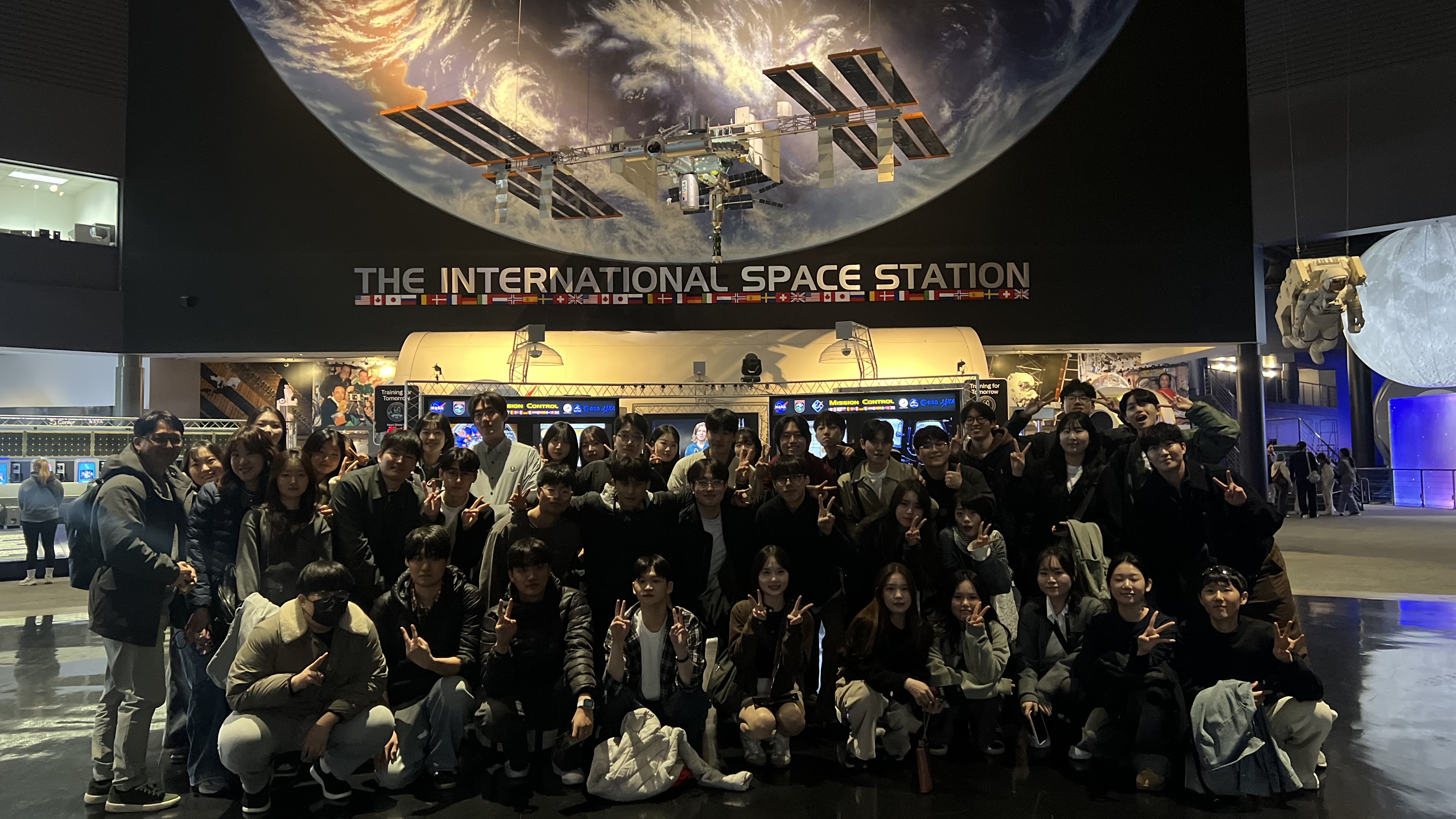
Following the lectures, students visited NASA Johnson Space Center, where they experienced the General Admission exhibits, the Apollo Mission Control Tram Tour, and the Historic Mission Control Tour. Walking through spaces that preserve the legacy of humanity’s journey into space, students felt the magnitude of space exploration and the countless challenges behind each achievement. Scenes once familiar only through textbooks and videos came vividly to life, inspiring awe and admiration.
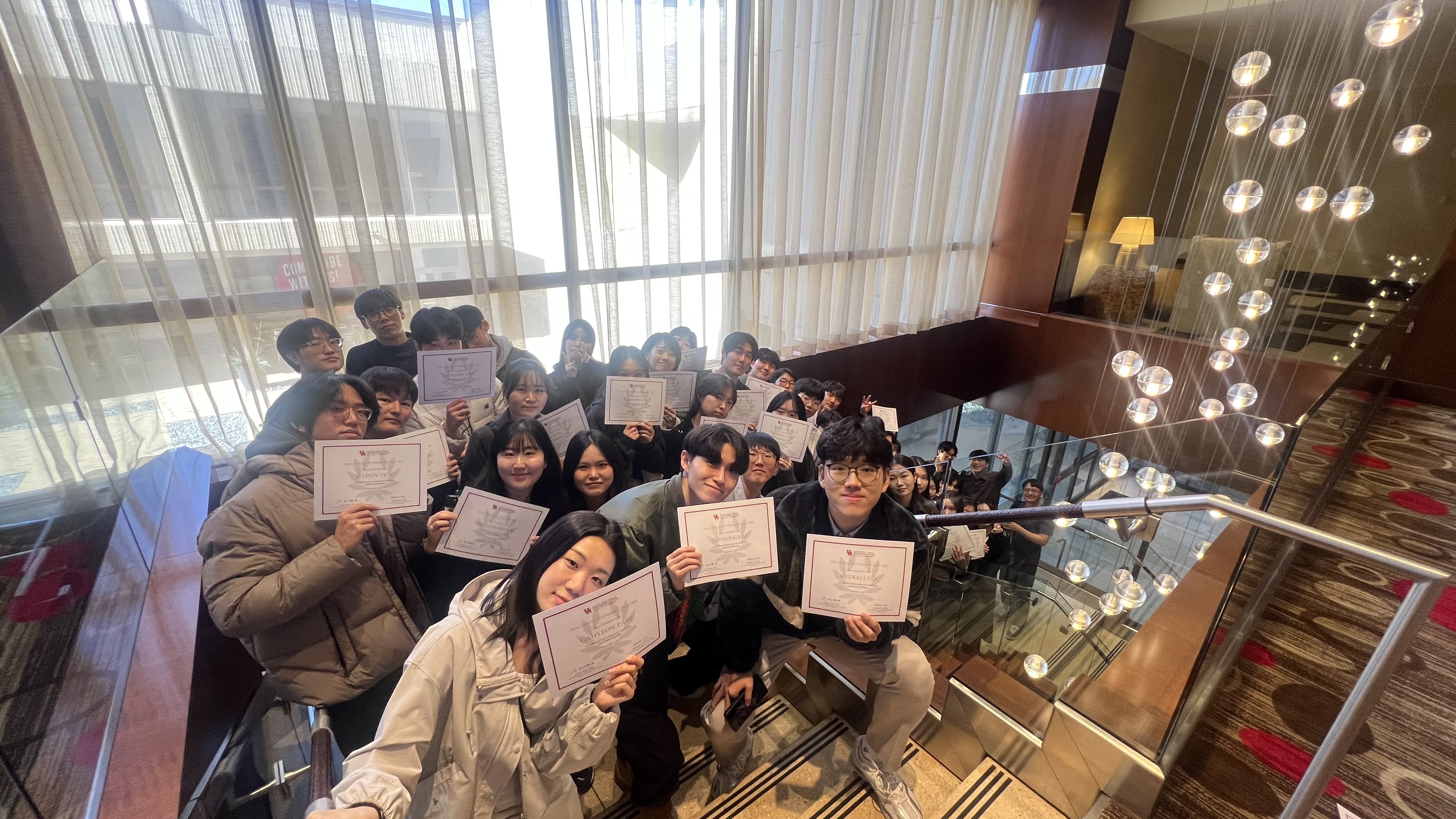
The Houston schedule concluded with a campus tour of the University of Houston, after which students received certificates of completion for the Global Leadership Field Trip. Despite the compact schedule, participants gained a profound understanding of what global leadership truly entails.
Inside the World of Manufacturing: Aerospace Industry at Boeing
On January 15, the group traveled to Seattle in preparation for their Boeing visit. The following day, a special VIP tour was arranged exclusively for the university’s students at the Boeing Everett Factory. As the largest aircraft manufacturing facility in the world, the factory’s vast scale and dynamic production environment left a lasting impression.
Students observed the production lines of aircraft such as the B-777X, B-787 Dreamliner, and 767F, witnessing the entire aircraft manufacturing process up close. Seeing classroom concepts realized in real-world production settings provided a powerful and memorable learning experience. The students’ continuous questions reflected their strong academic curiosity and genuine interest in the aerospace industry.
During the luncheon that followed, students met with Boeing employees and engineers from Korean Air. The professionals shared firsthand experiences and insights into the future of the industry, offering practical perspectives that strengthened students’ aspirations to pursue careers in aerospace.
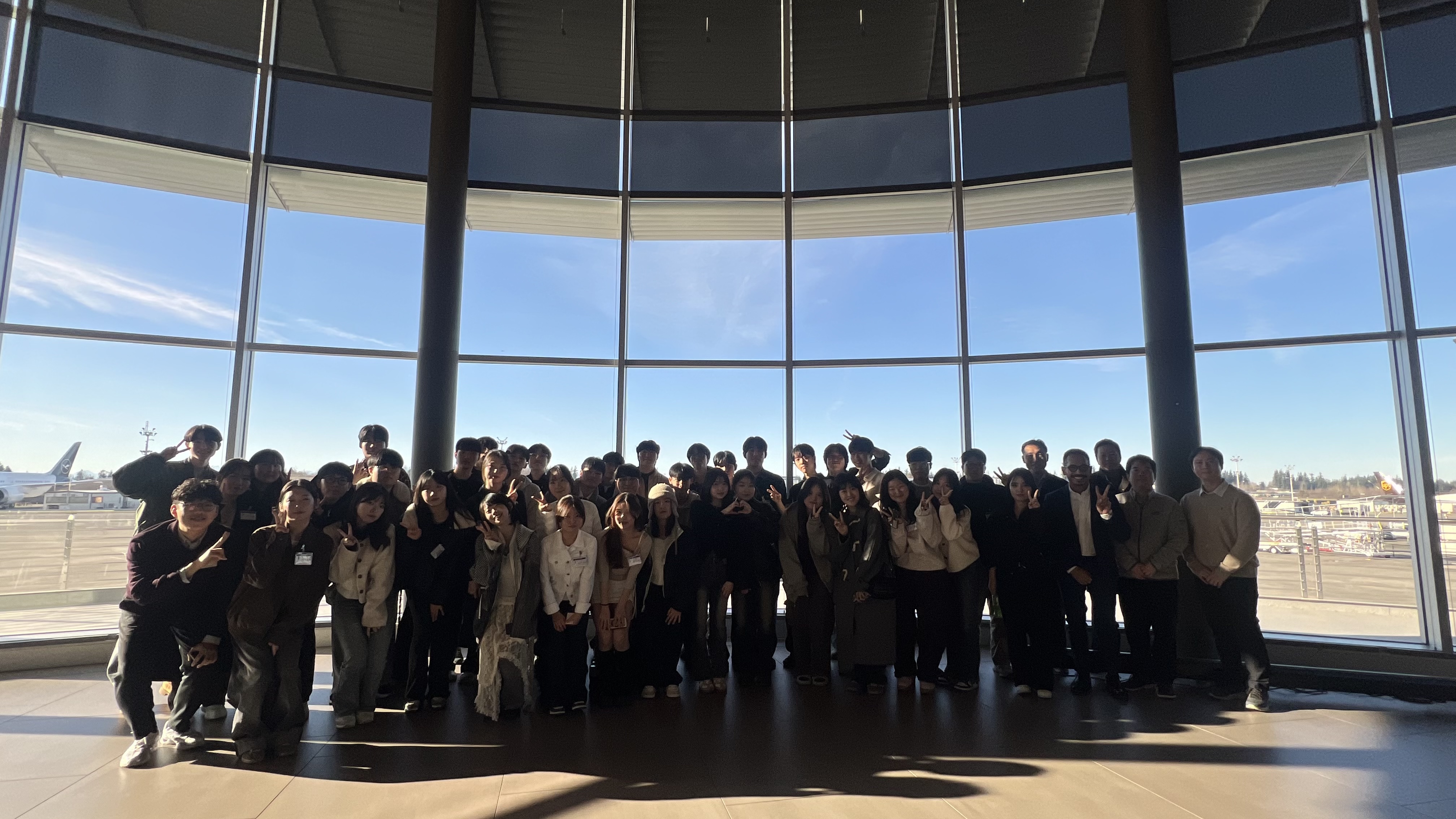
The final stop of the program was The Museum of Flight. Tracing the evolution of aviation from its origins to the present day, students reflected on the depth of technological progress and the enduring human spirit of challenge and innovation. This visit served as a meaningful moment of reflection on the significance of the entire program.
Park Ga-hyun (Class of ’23, School of Business Administration), the overall student leader, remarked, “It was incredibly meaningful to experience the aerospace industry in person, something I had previously only encountered through theory. Listening directly to professors at the University of Houston—especially lectures connected to my major—broadened my academic perspective and deepened my understanding of my field.”
Lee Sang-yeop (Class of ’21, Department of Electronics and Avionics Engineering) shared, “This program allowed me to experience moments that are not easily accessible. Visiting the University of Houston, NASA, and Boeing was extremely helpful in shaping my career path and expanding my worldview. I am truly grateful to the university and the Office of International Affairs for providing us with this opportunity.”
The NASA–BOEING Exploration Program offered students far more than an industry tour. It encouraged them to reflect seriously on their own potential and future paths. By engaging directly with world-leading institutions and corporations, students gained not only an understanding of technological advancement but also an appreciation for the responsibility and challenges embedded within it.
Through lectures, site visits, and interactions with industry professionals, participants had the opportunity to contemplate the skills and mindset required on the global stage. More than a simple field trip, this program marked a meaningful starting point for students as they define their academic and career trajectories.
These invaluable experiences were made possible through the university’s dedicated support, the efforts of the Office of International Affairs, and the warm hospitality of the University of Houston and partner institutions. The NASA–BOEING Exploration Program concluded by empowering students’ dreams and ambitions, leaving a lasting impact on the university’s journey toward cultivating global talent.

76, Hanggongdaehak-ro, Deogyang-gu, Goyang-si, Gyeonggi-do, 10540, Korea
Phone - +82-2-300-0114 FAX - +82-2-3158-5769 E-mail - webmaster@kau.ac.kr
COPYRIGHT 2022 Korea Aerospace University. All right reserved.