
-
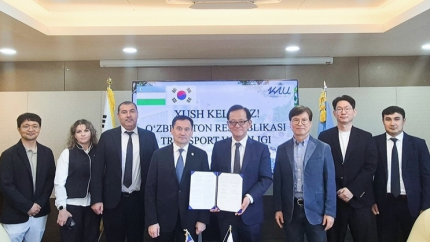
Korea Aerospace University signs MOU with Ministry of the Republic of Uzbekistan
On September 15 this year, the KAU signed a Memorandum of Understanding (MOU) with Minister of Transport Ilkhom Makhkamov, agreeing to elevate the aviation education cooperation between Korea and Uzbekistan to government-level project. [MORE]Diplomacy Journal
2026-09-17 -
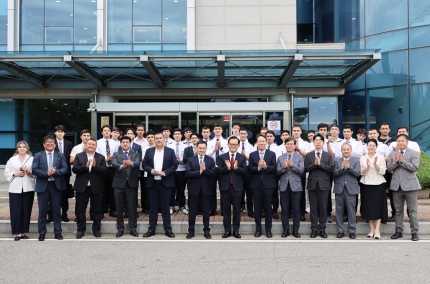
Korea Aerospace University Strengthens Cooperation with Uzbekistan on Pilot Training
Korea Aerospace University (KAU) is strengthening its cooperation with Uzbekistan in aviation education and pilot training. On September 12, Ilkhom MAKHKAMOV, Minister of Transport of Uzbekistan, and his delegation visited KAU to discuss ways to expand cooperation in aviation education and pilot training. The visit followed KAU President Heo Hee-young’s visit to Uzbekistan in April, where the two sides discussed ways to develop a long-term partnership in aviation education and pilot training. On April 29, President Heo met with Minister Makhkamov at the Uzbekistan Ministry of Transport. He proposed a step-by-step plan to help Uzbekistan develop into a hub for aviation personnel training in Central Asia. The two sides agreed to work together toward three main goals: providing international-standard pilot training, training future flight instructors in Uzbekistan, and building a sustainable pilot training system. They also agreed to establish a joint working group to develop and implement these plans. During the latest visit, the delegation discussed KAU’s international student education programs, the curriculum of the Department of International Studies, training programs for Tashkent State Transport University (TSTU) students, and KAU’s pilot training system. A major topic was how to train the pilots and aviation professionals needed for the continued growth of Uzbekistan’s aviation industry. The two sides discussed several specific areas of cooperation, including: Expanding the joint pilot training program with TSTU, including the Flight Operation 1+2+1 program, as well as joint degree programs with other universities in Uzbekistan Offering Private Pilot License (PPL) training and simulator training through KAU’s Jeongseok Flight Training Center Providing government support for flight training in Uzbekistan Recognizing flight hours completed in Korea and supporting the conversion of pilot licenses and qualifications Building a stronger pilot training system through cooperation in administrative and institutional areas KAU plans to use its nearly 40 years of experience in pilot training and its flight training facilities in Korea and the United States to support Uzbekistan’s growing demand for aviation professionals. KAU’s Flight Training Center began in 1986 as Korea’s first officially accredited flight training institution. Today, KAU operates flight training centers in Jeju, Jeongseok, and Uljin in Korea, as well as a flight training center in Sanford, Florida, in the United States. “We consider Uzbekistan one of KAU’s most important international education partners,” said President Heo Hee-young. “There is also growing potential for cooperation between Korea and Uzbekistan in the aviation sector.” He added, “We will continue to develop our partnership so that KAU’s experience and expertise in pilot training can make a meaningful contribution to the development of aviation professionals in Uzbekistan.” The Uzbekistan Ministry of Transport also expressed strong interest in KAU’s pilot training capabilities and its cooperation with TSTU. The ministry welcomed further cooperation between Korea and Uzbekistan in aviation personnel training. Meanwhile, KAU plans to expand its flight training facilities in the Jeju area from 2027 and develop the region into a world-class flight training hub. Based on this expanded infrastructure, KAU plans to further strengthen its pilot training partnerships with Uzbekistan and other international institutions. [MORE]Diplomacy Journal
2026-09-15 -
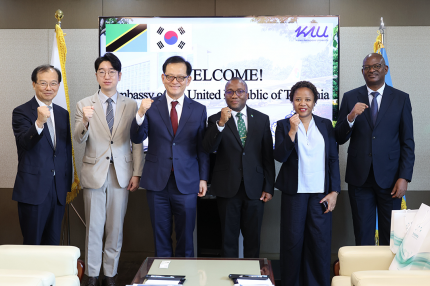
Tanzanian Ambassador Visits KAU to Discuss Cooperation in Aviation and AI
Noel Emmanuel Kaganda, Ambassador of Tanzania to Korea, and his delegation visited Korea Aerospace University (KAU) on September 2. They met with KAU representatives to discuss cooperation in aviation, AI, science, and technology. KAU President Heo Hee-young, Kim Sang-woo, Vice President for External Relations, and Professor Emeritus Lee Jin-sang attended the meeting. Both sides agreed to expand their partnership through education, research, and student exchanges. President Heo said, “We hope to develop more educational and research programs with Tanzania. In particular, we want to create practical cooperation projects in aviation that can benefit both countries.” Ambassador Kaganda explained that the Tanzanian government is working to strengthen cooperation with Korean institutions in science and technology, including AI. He said the Tanzanian Embassy would actively support new cooperation projects between Tanzania and KAU. He also mentioned the visit of Tanzanian President Samia Suluhu Hassan to KAU in June 2024, when she received an honorary doctorate. Ambassador Kaganda said KAU is an important partner for Tanzania’s development of aviation and aerospace technology and that the two sides should now move forward with practical projects. Tanzania’s aviation industry is growing quickly as more airports are being built and expanded and the number of aircraft is increasing. However, the country needs more educational programs to train aviation professionals. Ambassador Kaganda said the Embassy would help develop exchange programs between KAU and the Tanzania Civil Aviation Authority, which have already signed an MOU. The two sides also discussed Tanzania’s new Presidential Scholarship Program for science and technology. The program sends outstanding students to leading universities abroad. Ambassador Kaganda said he would work to send talented Tanzanian students to KAU to study aviation and aerospace, AI, and other fields. After the meeting, the delegation toured KAU’s A300 aircraft and educational facilities. Ambassador Kaganda also said he would work to arrange a visit by a KAU delegation to Tanzania soon. KAU expects its partnership with Tanzania to grow further, especially in aviation, AI, science and technology, and the development of talented young professionals.
2026-09-07 -
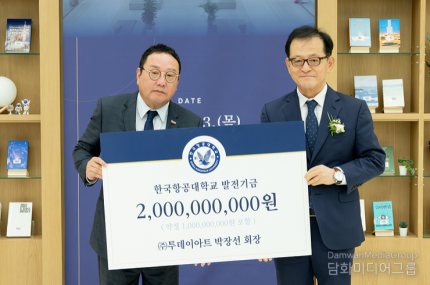
'Park Jang Sun Lounge' Opens at Korea Aerospace University Academic Information Center; "Chairman Park Jang Sun Donates Additional 1 Billion Won"
Korea Aerospace University held an opening ceremony for the 'Park Jang Sun Lounge', named after Chairman Park, on the first floor of the Academin Center on campus on the morning of september 3.
2026-09-04 -
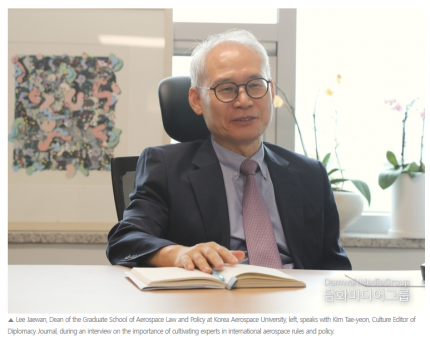
[interview] Dean Lee Jaewan: "Korea Should Become a Leader in Shaping Aerospace Rules"
Lee Jaewan, who took office as dean of KAU’s Graduate School of Aerospace Law and Policy in March, was interviewed about the direction Korea’s aerospace industry should take and the policy measures needed for the country to become a global leader in shaping international rules. [more]Diplomacy Journal
2026-08-26 -
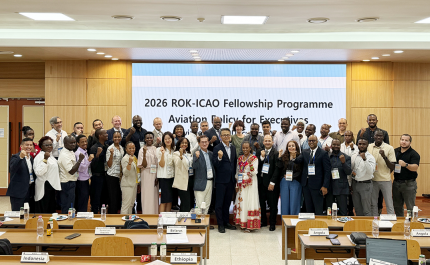
Korea Aerospace University Holds Global Aviation Policy Fellowship Policy Roundtable with the Ministry of Land, Infrastructure and Transport
The Global Aviation Policy Fellowship Policy Roundtable, jointly hosted by Korea Aerospace University and the Ministry of Land, Infrastructure and Transport (MOLIT), was held on August 6 in Lecture Hall 108. The event brought together university and ministry officials, aviation policy officials from developing countries, and aviation experts to share their experiences and insights and discuss ways to expand aviation policy exchanges between Korea and developing countries. A total of 15 senior government officials at the director and division chief levels from countries across Africa, Latin America, Asia, and Europe who are participating in MOLIT’s Senior-Level Aviation Policy Course attended the roundtable, along with 24 participants from the second cohort of Korea Aerospace University’s Global Aviation Policy Fellowship Program. Yoo Kyung-soo, Director General for Aviation Safety Policy at MOLIT; Kim Jin-gi, Dean of the Graduate School of Aviation Management; and Song Woon-kyung, Chair of the Department of Business Administration, also attended the event. Director General Yoo introduced Korea’s major aviation policies and outlined the government’s future policy directions. Participants in the Senior-Level Aviation Policy Course then shared the current state of their respective aviation industries and the policy challenges they face, while the fellowship participants gave presentations on key issues in international aviation policy and opportunities for cooperation among countries. The roundtable provided a valuable opportunity for practitioners working in different policy and institutional environments to exchange their expertise and experiences, deepen their understanding of Korea’s aviation policies, and lay the groundwork for continued international policy cooperation. The Global Aviation Policy Fellowship Program, which hosted the participants in the roundtable, is designed to cultivate aviation professionals who can contribute to the development of the aviation industries in developing countries. Targeting aviation experts from recipient countries designated by the OECD Development Assistance Committee (DAC) among ICAO member states, the program offers specialized training in the aviation and airport industries as well as a master’s degree program tailored to the needs of developing countries. The second cohort consists of 24 participants, including 19 from Africa, three from South Asia, one from Latin America, and one from the Middle East. Korea Aerospace University will continue to work closely with aviation-related institutions in Korea and abroad to cultivate aviation policy experts from around the world and further expand its international aviation policy network.
2026-08-24 -
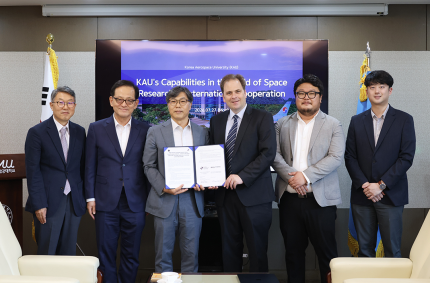
Institute of Space Systems Technology Signs MOU with the Institute of Aerospace Engineering at TU Dresden, Germany
The Institute of Space Systems Technology at our university signed a memorandum of understanding (MOU) with the Institute of Aerospace Engineering (Institut für Luft- und Raumfahrttechnik, ILR) at Technische Universität Dresden in Germany on July 27. The signing ceremony was held in the president’s reception room at the university’s main building. Under the agreement, the two institutions will cooperate in identifying joint research topics in the aerospace field, carrying out joint research and development projects, and jointly organizing and mutually inviting participants to academic events such as workshops and seminars. Founded in 1828, TU Dresden is a member of TU9, an alliance of nine leading technical universities in Germany. It was designated a University of Excellence in 2012 under the Excellence Strategy jointly promoted by the German federal and state governments and has maintained this status ever since. The ILR, the institute that signed the agreement, is a research institute within the Faculty of Mechanical Engineering. It conducts research across the aerospace field, including aircraft structural design, flight control, space propulsion systems, and highly integrated satellite systems. The Institute of Space Systems Technology at our university was established in May 2023 as an affiliated research institute to bring together the university’s capabilities in space research and development. Its research covers a broad range of areas, from system design to mechanical and electronic engineering and artificial intelligence, with a particular focus on satellite platforms and payload technologies. The institute also works to develop space-industry professionals in response to the needs of government and industry. The signing ceremony was attended by President Heo Hee-young; Oh Hyun-woong, Director of the Institute of Space Systems Technology; Professors Kim Byung-kyu, Cho Sung-geon, and Choi Seok-min; and Martin Tajmar, Director of the Institute of Aerospace Engineering at TU Dresden. The participants introduced their respective institutions and exchanged views on future areas of cooperation. Martin Tajmar said, “I hope that the research capabilities of the two institutions will lead to tangible results through European collaborative research programs. Korea and Europe should work together to strengthen the global competitiveness of the space industry through innovative technologies and close international cooperation.” Oh Hyun-woong said, “Building on this agreement, we will actively pursue joint research in the aerospace field and identify international collaborative research projects by linking the research capabilities of the two institutions. We will also expand exchanges between students and researchers to establish a sustainable framework for international cooperation.”
2026-08-11 -
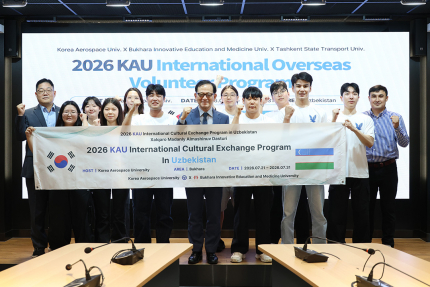
Korea Aerospace University Holds Send-off Ceremony for 2026 Summer Overseas Volunteer Team Students to Promote Educational and Cultural Exchange in Uzbekistan
Korea Aerospace University (KAU) held a send-off ceremony for its 2026 Summer Overseas Volunteer Team on July 20 in the conference room of the university's main administration building. The event celebrated the launch of the volunteer program and wished the participants a safe and successful journey as they prepare to engage in educational and cultural exchange with university students in Uzbekistan. The 2026 Summer Overseas Volunteer Team consists of 15 members, including 13 students, Dean of Student Affairs Lee Sang-hak, and Professor Shavkat. Led by Student Vice President Joo Min-jae, the team will carry out an 11-day program in Uzbekistan from July 21 to 31. Two Uzbek exchange students currently studying at KAU will also join the team, helping facilitate communication and exchange with local university students. During the program, the team will visit Tashkent State Transport University (TSTU) in Tashkent and Bukhara Innovative Medical University (BIMU) in Bukhara, where they will conduct a variety of educational and cultural exchange activities with local students. Participants have been divided into three groups—the Aviation & Drone Team, AI Team, and Korean Culture Team—each offering programs that reflect their academic backgrounds and areas of expertise. The Aviation & Drone Team will provide drone simulation training, including both theoretical instruction and hands-on practice, followed by a quiz competition. The AI Team will introduce participants to AI-powered short-form content creation using the Higgsfield platform. Meanwhile, the Korean Culture Team will offer Korean language lessons and a Hangul bead bracelet-making activity, providing local students with an engaging introduction to Korean culture. In addition to these programs, the volunteer team will visit historical and cultural landmarks in Tashkent and Bukhara to experience Uzbekistan's rich cultural heritage. At the ceremony, KAU President Heo Hee-young remarked, "The two universities we will be visiting are outstanding institutions that maintain strong and friendly ties with both Korea and KAU. Rather than viewing this simply as educational volunteering, I hope you will see it as an opportunity for mutual learning and exchange. Please approach every interaction with humility and respect for your counterparts." He added, "As representatives of KAU, I hope you will take pride in your role while recognizing the responsibility it carries. Above all, make your safety the highest priority and complete every part of the program in good health."
2026-07-27 -
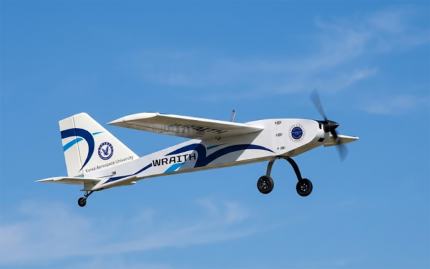
Flight Training Center Becomes Korea’s First University Authorized as a Specialized Training Organization for Unmanned Airplanes
The Flight Training Center was officially designated as a Specialized Training Organization for Ultra-Light Vehicle Operators (Unmanned Airplane Category) by the Korea Transportation Safety Authority (TS) in June. Korea Aerospace University is the first university in the country to receive this authorization for unmanned airplanes (fixed-wing drones). The Korea Transportation Safety Authority grants Specialized Training Organization authorization in four categories: unmanned multicopters, unmanned airplanes, unmanned vertical takeoff and landing (VTOL) aircraft, and unmanned helicopters. The Flight Training Center became the first university in Korea to receive authorization for unmanned multicopter training in 2016 and has now expanded its qualifications to include the unmanned airplane category. The Center also plans to apply for authorization in the unmanned VTOL category later this year. Once approved, it will operate pilot training programs across three categories of ultra-light unmanned aircraft. Specialized Training Organizations are accredited by the Korea Transportation Safety Authority after their training facilities, instructors, and curricula have been thoroughly evaluated. Individuals who complete the approved training program are exempt from the written examination required for the national pilot certification. In addition, Korea Aerospace University’s training site has been designated as an official practical examination venue, allowing trainees to complete both their training and practical certification test at the same location, making the certification process more convenient. With this latest designation, the Flight Training Center is now authorized to offer Level 1, Level 2, and Level 3 pilot training programs for unmanned airplanes. The curriculum includes classroom instruction covering aviation regulations, aviation meteorology, aerodynamics, and flight operations, as well as simulator-based flight training and hands-on flight practice using actual unmanned airplanes. All training and evaluations are conducted in accordance with the standards established by the Korea Transportation Safety Authority. Unlike multicopters, unmanned airplanes are capable of long-range operations over wide areas, making them increasingly valuable in applications such as environmental monitoring, disaster response, national defense, and logistics. As these applications continue to expand, demand for qualified professionals in the field is also steadily increasing. A representative of the Flight Training Center stated, “With this designation as a Specialized Training Organization for unmanned airplanes, we plan to systematically provide national certification training not only for the general public but also for our students and researchers. We will also expand research in industry-academia collaboration and advanced drone demonstration projects, with the goal of becoming Korea’s leading professional drone training institution.”
2026-07-15 -
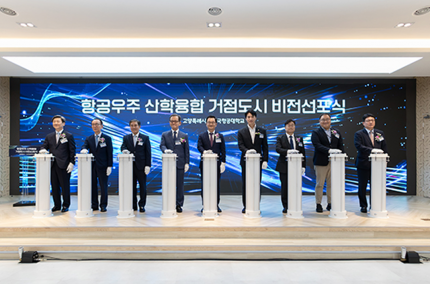
Korea Aerospace University and Goyang Special City Hold Vision Declaration Ceremony for an Aerospace Industry-Academia Innovation Hub
On July 6 at 2:00 p.m., Korea Aerospace University (KAU) and Goyang Special City jointly held the Vision Declaration Ceremony for an Aerospace Industry-Academia Innovation Hub at Vision Hall in the Aerospace Center. Hosted by Goyang Special City and organized by KAU, the event officially announced the shared vision of establishing an Aerospace Industry-Academia Innovation Center in the Baekseok Business District and developing Goyang into a leading cluster for the aerospace, aviation maintenance (MRO), and space industries in the Seoul metropolitan area. The ceremony was attended by Goyang Mayor Min Kyung-sun, KAU President Heo Hee-young, National Assembly Member Han Jun-ho, Goyang Industry Promotion Agency President Han Dong-gyun, Kookmin University President Jeong Seung-ryeol, Dongguk University Bio-Medi Campus Vice President Seong Jeong-seok, Korea Institute of Civil Engineering and Building Technology President Park Seon-gyu, Korea Institute of Aviation Safety Technology President Hwang Ho-won, Acting Chairman of the Korea Aerospace Industries Association Park Jong-heum, Goyang Chamber of Commerce and Industry Chairman Lee Sang-heon, Goyang Federation of Business Leaders Chair Shin Young-i, Korea Aerospace Industries Association Strategic Planning Director Lee Sang-seop, Gyeonggi Business & Science Accelerator Director Kim Gil-a, Gyeonggi Center for Creative Economy & Innovation Director Kim Dae-soo, Goyang Newspaper CEO Kwon Gu-young, INNOSPACE CEO Kim Soo-jong, Pablo Air Chairman Kim Young-jun, and many other representatives from government, industry, academia, and research institutions. The ceremony included a welcome address by Mayor Min Kyung-sun, congratulatory remarks from Representative Han Jun-ho and President Heo Hee-young, a presentation of the vision by Oh Hyun-woong, Director of KAU's Office of Industry-Academic Cooperation, and a joint vision declaration ceremony with distinguished guests. In his welcome speech, Mayor Min said, "Standing here today is even more exciting than my inauguration." He noted that the vision declaration was made possible through the combined efforts of President Heo, Representative Han, and many other partners. Referring to the Baekseok Business District, which had experienced years of challenges, he expressed confidence that it would become "a dynamic place for a new leap forward." He also pledged strong administrative support, saying, "This declaration represents our shared commitment, and as mayor, I will take the lead." Representative Han Jun-ho recalled that he had once dreamed of becoming a pilot and prepared to enter KAU as a student. He said he was "very proud to represent a district that is home to Korea Aerospace University." Recently appointed as the ranking member of the National Assembly's Science, ICT, Broadcasting and Communications Committee, Han also recalled supporting KAU's designation as a Software-Centered University six years ago. He pledged to work with Goyang Special City and KAU to turn today's vision into reality as the government continues to prioritize the aerospace industry as a strategic high-tech sector. President Heo Hee-young noted that KAU, founded in Busan in 1952 and relocated to Goyang in 1963, has been growing alongside the local community for 63 years. He emphasized that the university would dedicate all of its capabilities to industry-academia collaboration in support of Goyang and Gyeonggi Province's vision of becoming a hub for aerospace and defense industries. He added that the establishment of the Aerospace Industry-Academia Innovation Center in Baekseok would provide an opportunity for Goyang and northern Gyeonggi to emerge as a new center of Korea's aerospace industry while creating a successful model of regional-university cooperation. Oh Hyun-woong, who also serves as a member of the Presidential National Space Committee, presented the vision titled "The Future Vision for Aerospace Industry Development Centered on Goyang Special City." He explained that the global space industry is rapidly expanding into areas such as space data centers, lunar base construction, space manufacturing, biotechnology, and energy, while drones and satellites are becoming critical strategic infrastructure for future security. He noted that, in addition to Korea's three major space industry clusters in Daejeon, Sacheon, and Goheung, Jeju is emerging as a hub for satellite manufacturing and ground stations. Against this backdrop, he stressed the need to establish a strong aerospace ecosystem in the Seoul metropolitan area and position Goyang as a strategic center. Building on existing research infrastructure, the vision proposes creating an aerospace, space, and MRO cluster in northern Gyeonggi Province. Oh highlighted Goyang's advantages, including its metropolitan location, transportation links to Gimpo and Incheon International Airports, and KAU's strength as Korea's leading aerospace university. He expressed his hope that Goyang would become "a gateway to the sky economy and the space economy." At the heart of this vision is the Aerospace Industry-Academia Innovation Center to be established in the Baekseok Business District. The center will integrate KAU's research and educational capabilities with Goyang's industrial infrastructure and Gyeonggi Province's key development projects. It aims to foster an aerospace ecosystem that extends from aviation, drones, and Urban Air Mobility (UAM) to satellites, launch vehicles, and space infrastructure, creating new growth opportunities for the city. The center plans to attract aerospace, space, and MRO companies, establish national testing and certification facilities, and nurture aerospace startups. It will also connect major regional assets—including the KINTEX UAM Vertiport, the Goyang Drone Anchor Center, and the Korea Institute of Civil Engineering and Building Technology—to form an integrated aerospace industry cluster. This initiative aligns closely with Goyang's policy of attracting advanced industries to create new growth engines and quality jobs. During the vision declaration ceremony, Mayor Min Kyung-sun, President Heo Hee-young, Representative Han Jun-ho, and other distinguished guests pressed a ceremonial button together. The words "Aerospace," "Advanced Technology," "Innovation," "Jobs," and "Future" appeared on the screen, symbolizing Goyang's new vision. Participants then joined together in chanting, "Goyang Special City, soar as a leading aerospace industry-academia innovation hub!" The event concluded with a commemorative group photo.
2026-07-08 -
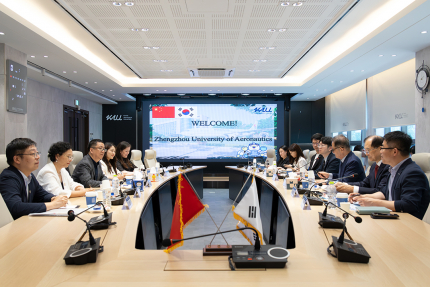
KAU Signs MOU with Zhengzhou University of Aeronautics to Strengthen Global Aerospace Education
On June 10, Korea Aerospace University (KAU) signed a Memorandum of Understanding (MOU) with Zhengzhou University of Aeronautics (ZUA) from China in the conference room of the KAU Main Building. The two institutions met to strengthen international cooperation and discuss mutual development plans. The signing ceremony was attended by key representatives from both universities. The delegation from ZUA included Dr. Wang Yonggang (Dean of the School of Business), Ruan Ying (Director of the Audit Department), and Zhang Hui (Administrative Director of the School of Business). KAU was represented by President Hur Hee-young, Kim Sang-woo (Dean of International Affairs), Lee Jin-sang (Director of the International Cooperation and Development Center), and Professor Cho Shin-saeng.Founded in 1949 and located in Henan Province, Zhengzhou University of Aeronautics (ZUA) is a prominent public university specialized in aviation under the Civil Aviation Administration of China (CAAC). With an enrollment of approximately 30,000 students, ZUA boasts strong academic programs not only in engineering sectors such as aerospace, electronic information, and computer science, but also in business, accounting, and logistics. Notably, in partnership with South Ural State University in Russia, ZUA operates the "South Ural College"—a Joint Education Institution approved by China's Ministry of Education—demonstrating its advanced capability in managing global joint degree programs.Henan Province, with a population of 100 million, is the most populous province and the geographical heart of China. Historically known as "China’s Granary" due to its thriving agriculture, the province has recently been restructuring its economy around high-tech aerospace industries. In line with this, the Zhengzhou region has been designated as a national-level Aerospace Economic Comprehensive Experimental Zone.Under this new agreement, KAU and ZUA will expand mutual cooperation across various fields, including:Exchange of educational, research, and administrative staffOperation of short-term language programs and student exchange programsMutual recognition of academic creditsDegree advancement programs for students and facultyJoint research and academic exchangesMoving forward, the two universities plan to promote international exchanges focusing on ZUA's three majors—Logistics Management, Logistics Engineering, and Transportation—and KAU’s Service Management major. They also exchanged ideas on the potential establishment of a future Joint Education Institution (a cooperative educational entity co-managed by Chinese and foreign universities)."Henan Province has the largest student population in China and a high ratio of top-tier students. However, since ZUA is the only university in the region ranked among China’s top 100, the competition for admission is exceptionally fierce," said Dr. Wang Yonggang, Dean of the School of Business at ZUA. He added, "The Henan provincial government, which is highly invested in the aviation sector, allocated 100 billion KRW (approx. 540 million RMB) to our university last year and secures land near Zhengzhou Airport. As we are deeply committed to nurturing elite aviation talent, we look forward to expanding our exchanges with KAU."President Hur Hee-young responded, "KAU not only maintains a rigorous academic management system but also shares a close cooperation network through regular exchanges with Chinese airlines operating in South Korea. We look forward to this partnership with Zhengzhou University of Aeronautics yielding fruitful results."KAU plans to continue working-level discussions with ZUA to develop specific and actionable cooperation models.
2026-06-17 -
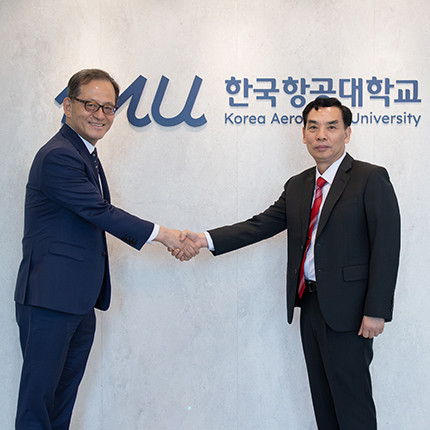
Delegation from Le Quy Don Technical University Visits Korea Aerospace University to Discuss Phased Cooperation Programs
On May 22, a delegation from Le Quy Don Technical University (LQDTU) in Vietnam, led by President Le Minh Thai, visited Korea Aerospace University (KAU) to discuss plans for implementing academic exchange and cooperation programs. The visit was arranged as a follow-up to the Memorandum of Understanding (MOU) signed between the two institutions in December of last year. The meeting took place in the conference room of KAU’s main administration building and included welcoming remarks, introductions of both institutions, discussions on cooperation initiatives, and an exchange of commemorative gifts. The Vietnamese delegation consisted of President Le Minh Thai; Ngo Thanh Long, Director of Academic Affairs; Cao Hai Truong, Dean of the Faculty of Physics and Chemical Engineering; Nguyen Quoc Dinh, Director of the Vietnam–Japan International Cooperation Center for Science and Technology; and Nguyen Anh Tuan, Head of the Department of Aircraft Systems Design within the Faculty of Aerospace Engineering. Representing KAU were President Hee-Young Huh; Junseon Ahn, Dean of the College of AI Convergence; Sang-Woo Kim, Director of the Office of International Affairs; Soo-Hyun Park, Chair Professor of Aerospace Engineering; and Hae-Sung Yoon, Chair Professor of Mechanical Engineering. During the meeting, President Le Minh Thai proposed three exchange programs: a short-term student exchange program lasting six to twelve months, a three-month visiting researcher program, and a one- to two-week training program for university administrative staff focusing on artificial intelligence and digital transformation. He also expressed interest in expanding research collaboration in areas such as unmanned aerial vehicles (UAVs), composite structures, rocket propulsion, space technology, and computational fluid dynamics (CFD). President Hee-Young Huh remarked, “Vietnam is a young and dynamic country,” and added, “We look forward to actively promoting phased cooperation following this visit.” He suggested beginning with an administrative staff training program while organizing faculty exchange seminars in parallel, followed by deeper collaboration through joint supervision of master’s and doctoral students. He also noted that KAU’s short-term training programs, previously conducted with partner institutions in Uzbekistan and Laos, could be adapted to include visits to leading Korean defense and aerospace companies such as Korea Aerospace Industries (KAI), Hanwha Aerospace, LIG Nex1, Korean Air, and Hyundai Rotem. President Le Minh Thai responded, “I am pleased to have the opportunity to discuss the details of our cooperation in person following the signing of the MOU,” adding, “I hope both institutions will work together to establish a sustainable exchange system in the years ahead.” Located in Hanoi, Le Quy Don Technical University is a national university specializing in engineering disciplines, including aerospace engineering and mechanical engineering. Building on its strong research capabilities in defense and industrial technologies, the university has been expanding its international partnerships. Since signing the MOU in December 2024, LQDTU and KAU have continued to strengthen their cooperative relationship.
2026-06-01 -
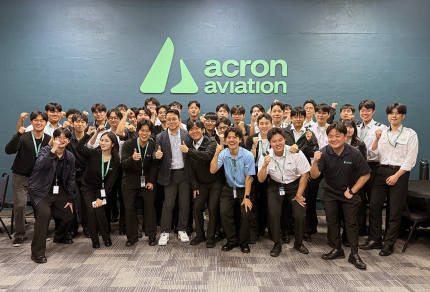
KAU Opens Local Office at Sanford Flight Academy and Launches 'KAU Ambassador' Program
Korea Aerospace University (KAU) has further strengthened its support system for flight training in Sanford, Florida. On April 9 (local time), KAU opened a dedicated 'KAU Office' within the Acron Aviation Academy in Sanford and officially launched the 'KAU Ambassador' student support program. This initiative aims to expand the operational foundation of the Sanford Flight Academy, which opened in May 2024, and to ensure a more stable environment for student support and training management. Notably, as KAU’s partner institution, formerly known as L3Harris, rebranded as Acron Aviation Academy, the local cooperation and student support systems have also been newly reorganized. The newly opened KAU Office will serve as a real-time communication channel between the flight academy and KAU. It will also function as a hub to provide close, hands-on support for students' academic and daily lives during their training in the U.S. In tandem with the office opening, KAU appointed three current trainees as the first 'KAU Ambassadors.' Based on their firsthand experience with the U.S. training system, these ambassadors will help incoming students adapt to the new environment and share practical tips for living and training in the U.S. They will also act as a bridge between the university and the trainees by sharing updates on local training and campus environments through various channels, including social media. Lee Jun-yong, one of the newly appointed KAU Ambassadors, shared his thoughts: "I feel a great sense of pride and responsibility to serve as one of the first ambassadors. I will actively share my experiences and information to help junior trainees minimize trial and error and settle in smoothly in a new environment." Kim In-gyu, Director of the Flight Training Center, stated, "Based on our cooperation with overseas flight academies, we are continuously strengthening our local support system so that students can train in a safer and more stable environment. We will continue to build a world-class flight education environment to nurture top-tier pilots." Meanwhile, during this official trip, the KAU delegation also visited other major overseas partner institutions, including Hillsboro Aero Academy, to discuss the status of joint educational programs and ways to improve the training environment. Through these efforts, KAU plans to review the operational foundations of its overseas flight training programs and further solidify its international educational cooperation network.
2026-05-22 -
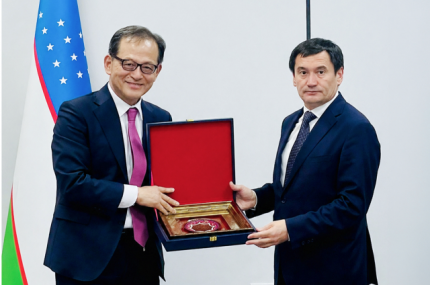
Cooperation with the Uzbek Government to Build a Central Asian Aviation Talent Hub
Korea Aerospace University is set to become a “game changer” in the Central Asian aviation industry through its partnership with the Uzbek government. President Heo Hee-young announced that, during a meeting with Uzbekistan’s Minister of Transport, the two sides finalized a step-by-step cooperation plan aimed at developing Uzbekistan into a regional aviation hub. On April 29 (local time), President Heo met with Minister of Transport Ilkhom Mahkamov at the Ministry of Transport headquarters in Uzbekistan and proposed a “strategic master plan” to foster Uzbekistan as a Central Asian hub for aviation workforce training. The meeting drew considerable attention, with even officials at the Korean Embassy in Uzbekistan commenting that arranging a direct meeting with the minister was extremely difficult. After listening carefully to President Heo’s proposal, Minister Mahkamov instructed his staff to move forward with the project without delay. President Heo also highlighted potential risks that could arise from the rapid expansion of Uzbekistan’s aviation market, citing historical examples to emphasize the importance of establishing a strong safety management system and a stable workforce supply structure that can keep pace with aircraft acquisitions. To address these challenges, Korea Aerospace University proposed a master plan centered on:△ consulting on the establishment of an International Flight Training Center at Navoi International Airport,△ consulting on the development of a National Aviation Safety and Security Center, and△ introducing customized pilot training curricula tailored to industry demand. In particular, the proposal gained strong trust from the Uzbek side because it included a contingency plan for outsourced training in Korea in case local infrastructure development is delayed, thereby ensuring operational continuity. President Heo stated, “The cooperation between Korea Aerospace University and Uzbekistan goes beyond educational exchange. It is about building strategies to strengthen the competitiveness of Uzbekistan’s aviation industry. By sharing our experience and expertise in aviation training, we hope to contribute to making Uzbekistan a major aviation hub in Central Asia.” Both sides also agreed to launch a Joint Working Group within the second quarter of this year. The group will oversee the establishment of the Navoi International Flight Training Center, procedures for introducing aircraft and simulators, and the development of a training system for aviation safety inspectors, opening a new chapter in aviation workforce development in Uzbekistan. Meanwhile, on the same day, President Heo signed a 2+2 dual degree agreement with Tashkent State Transport University (TSTU) for programs in Aviation Management and Air Transport Logistics. The two universities have already been operating a 1+2+1 dual degree program in Flight Operations since the second semester of the 2025 academic year, and this latest agreement further expands the scope of academic cooperation. The program is expected to serve as a key pathway for securing future faculty members who will lead aviation education in Uzbekistan. Korea Aerospace University also plans to connect outstanding graduates to master’s degree programs and cultivate them into expert professionals capable of directly operating educational systems tailored to Uzbekistan’s local aviation environment.
2026-05-07 -
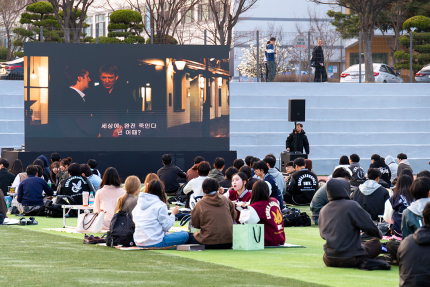
A Springtime Cinema on the Grass: Students Gather for the Aviation Film Festival
On April 1, the student council hosted the “Aviation Film Festival” on the university sports field, offering students a chance to relax and connect with one another. First launched last year, the event was designed to help freshmen and returning students mingle naturally, build relationships, and foster a vibrant campus culture. The festival was held in two sessions—afternoon and evening—to accommodate students’ schedules. Forrest Gump was screened in the first session, followed by About Time in the second, allowing students to d r o p by freely between classes. The outdoor screening area, set up on the field, was transformed into a cozy open-air cinema. Despite the overcast weather, the soft glow of the screen created a warm and emotional atmosphere, offering a unique and memorable viewing experience. Around 500 students attended the event. Seven food trucks were on site, offering a wide variety of snacks and meals, while the student council also operated event booths that naturally drew students in. The student council group “Cheongun” sold limited-edition Mach keycap keyrings on a first-come, first-served basis, gave away free popcorn, and hosted an SNS subscription event to encourage participation. Students gathered in small groups across the grass, watching movies, chatting, and enjoying a laid-back evening. Many spread out picnic mats with friends, shared laughter, and took photos to capture the moment. One student commented, “With such a busy schedule of classes and part-time work, it was really nice to take a break and watch a movie during my free time. It gave me a boost to prepare for the upcoming midterms.” The Aviation Film Festival is quickly becoming a meaningful campus tradition, offering students a chance to pause, connect, and enjoy a moment of relaxation amid their busy lives.
2026-04-13 -
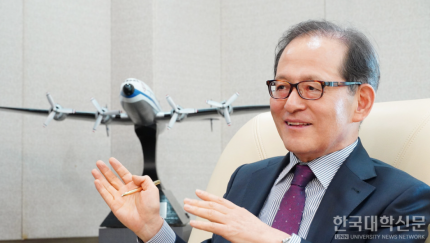
[University News Network] Heo Hee-young, President of Korea Aerospace University: “We Will Leap to Become a Global Hub for 'K-Aviation' by Establishing an Aerospace Cluster”
President Heeyoung Hur of Korea Aerospace University (KAU) recently sat down for an interview with the University News Network (UNN). Sharing his thoughts on his reappointment, President Hur stated, "My goal is to establish KAU as a world-class university specialized in aerospace." He further expressed his ambition by adding, "We will drive national competitiveness by completing an 'Aerospace Cluster' that seamlessly integrates the university, industries, and research institutes." [Read the full article]University News Network (UNN)
2026-03-26 -
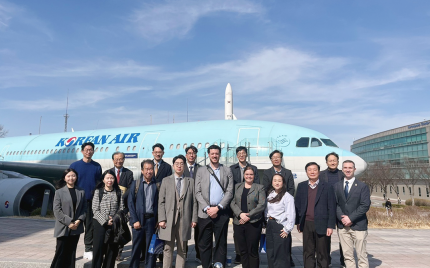
Korea–U.S. Drone Cooperation Takes Flight Through Official Visit and Joint Research Discussions
On March 19, an official visit aimed at strengthening Korea–U.S. cooperation in the drone industry was held in the main conference room on the second floor of the university’s main building. This event was organized as part of the Korea–U.S. International Cooperation Forum jointly promoted by the Ministry of Land, Infrastructure and Transport of Korea and the State of North Dakota. Participants discussed ways to expand global joint research initiatives and strengthen collaboration among academia, industry, and research institutions. Through this visit, the university has taken on the role of a Korean partner in the R&D sector, with discussions focusing on potential directions for future joint research. The event was attended by representatives from the Government of North Dakota and the University of North Dakota, along with key figures from academia, industry, and research communities in both countries. From the university, the Director of the Office of International Affairs, faculty members from the Departments of Aerospace Engineering, Air Transportation, Artificial Intelligence, and Computer Science, as well as Distinguished Professor Jin-Sang Lee, participated and shared perspectives on interdisciplinary collaboration. Participants exchanged views on cooperation across the broader aerospace sector, including drones. There was a shared understanding of the need to establish a collaborative framework based on each country’s strengths. Various forms of cooperation were discussed, including joint research, technology partnerships, and personnel exchange. Building on these discussions, the university plans to explore participation in joint research and technological collaboration, leveraging its accumulated research experience and strong industry–academia cooperation capabilities in the aerospace field. It will also examine potential alignment with Korea’s national policies on drones and Urban Air Mobility (UAM) led by the Ministry of Land, Infrastructure and Transport. Kim Sang-woo, Director of the Office of International Affairs, stated, “This visit was a meaningful opportunity to confirm the potential for Korea–U.S. cooperation and to lay the groundwork for future joint research. Based on our university’s strengths in research and education across the entire aerospace field, we will actively expand collaboration with various international institutions.”
2026-03-24 -
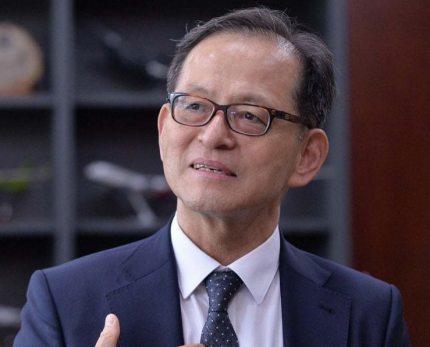
Exporting K-Aviation : KAU Takes It's Expertise to The World
Korea Aerospace University is expanding its global presence across five continents, from dual-degree partnership programs to ICAO-linked initiatives. [Read the full article]
2026-03-24 -
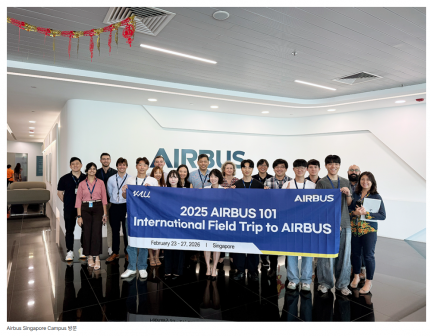
KAU Students Visit Singapore for “2025 AIRBUS 101 Global Exploration Program”
Korea Aerospace University (KAU) and Airbus Korea jointly held the “2025 AIRBUS 101 Global Exploration Program” in Singapore from February 23 to 27. The overseas program was designed to provide the top three teams from the “2025 AIRBUS 101 Idea Competition” with an opportunity to experience the global aerospace industry firsthand. Participants visited major aerospace companies and educational institutions, including the Airbus Singapore Campus—one of the key hubs of the Asia-Pacific aviation industry. The program aimed to help students observe world-class technological innovation and industrial ecosystems on site while expanding their global perspective and academic expertise through interactions with professionals from international companies. During the visit, the delegation attended a briefing at the R&T (Research & Technology) Center of the Airbus Singapore Campus, where they learned about Airbus’ business operations in the Asia-Pacific region and its research directions in sustainable aviation technologies. At the Airbus Asia Training Centre (AATC), students toured pilot training facilities, including a Full Flight Simulator (FFS), gaining insight into advanced aviation training systems. The winning teams from the competition also presented their ideas to Airbus staff and received professional feedback. In addition, they participated in the “AeroStorm! Challenge” and a program on Sustainable Aviation Fuel (SAF) organized by Airbus, which helped them better understand key challenges facing the future aviation industry and apply practical problem-solving skills. The group also visited Satair, an Airbus Group subsidiary, to learn about aircraft parts supply chains and logistics operations. The delegation later visited the Advanced Remanufacturing and Technology Centre (ARTC) under Singapore’s Agency for Science, Technology and Research (A*STAR), where they explored real-world applications of advanced manufacturing technologies. The program concluded with visits to Nanyang Technological University (NTU) and the Asia campus of Embry-Riddle Aeronautical University (ERAU Asia), where students observed industry-academia collaboration models and global aviation education programs. This exploration program provided students with valuable opportunities to experience research, education, and industry environments within the global aerospace sector. It also allowed them to extend the achievements of the idea competition into real-world industry experiences and broaden their practical perspectives through engagement with global companies. Professor Park Soo-hyun, who led the delegation, stated, “Airbus, which has its Asia hub in Singapore, and Korea Aerospace University, a leading aerospace education institution in Korea, have developed a strategic partnership through ongoing exchanges. We look forward to further strengthening our mutually beneficial cooperation in the future.”
2026-03-11 -
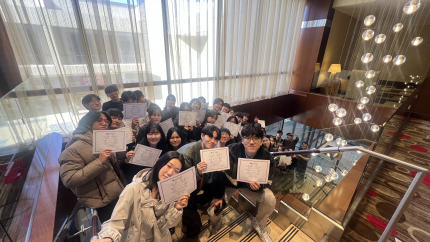
Exploring the Frontiers of U.S. Aerospace Innovation
The 2025 NASA–BOEING Exploration Program Successfully ConcludedThe 2025 NASA–BOEING Exploration Program, designed to explore the forefront of aerospace innovation in the United States, was successfully held from January 12 to 16. Organized annually by the Office of International Affairs during the winter break, the program aims to broaden students’ understanding of global corporations and institutions while nurturing future global leaders. This year’s program offered students a rare and meaningful opportunity to experience the aerospace industry firsthand. A total of 40 students participated, including 27 students selected by the Office of International Affairs and 13 team leaders and award recipients from the 2025 BOEING DAY program. The itinerary included visits to the University of Houston and NASA Johnson Space Center in Houston, Texas, as well as the Boeing Everett Factory and The Museum of Flight in Seattle, Washington. Stepping beyond the classroom, students encountered the real-world environments that drive the global aerospace industry, experiencing moments where theory and practice converged. The delegation arrived in Houston on January 12 and began the program at the Hilton University of Houston Hotel. The core component of the program—the Global Leadership Field Trip—was conducted over two days, from January 13 to 14. Newly introduced this year, the program at the University of Houston added greater depth and academic significance to the exploration. From Knowledge to Experience: Encountering Global Leadership Students engaged directly with local faculty through a series of lectures hosted by the Hilton College of Global Hospitality Leadership. Held over two days, these sessions enhanced the academic rigor of the program. Dr. Agnes Lee DeFranco delivered a lecture titled “Corporate Digital Responsibility: Code of Conduct and Best Practices in the Lodging and Club Industries,” while Dr. Minwoo Lee presented “AI Meets Service Management: AI-Powered Data Analytics.” The lectures examined corporate responsibility in an era of rapid technological advancement and explored the future of the service industry driven by artificial intelligence. Beyond acquiring knowledge, students gained a deeper appreciation for the importance of critical thinking and inquiry within a global industrial context. The sessions encouraged them to reflect on the intersection of technology and society and to consider their roles as future global professionals. ▲ NASA Johnson Space Center Following the lectures, students visited NASA Johnson Space Center, where they experienced the General Admission exhibits, the Apollo Mission Control Tram Tour, and the Historic Mission Control Tour. Walking through spaces that preserve the legacy of humanity’s journey into space, students felt the magnitude of space exploration and the countless challenges behind each achievement. Scenes once familiar only through textbooks and videos came vividly to life, inspiring awe and admiration. The Houston schedule concluded with a campus tour of the University of Houston, after which students received certificates of completion for the Global Leadership Field Trip. Despite the compact schedule, participants gained a profound understanding of what global leadership truly entails. ▲ Global Leadership Field Trip at the University of Houston Inside the World of Manufacturing: Aerospace Industry at Boeing On January 15, the group traveled to Seattle in preparation for their Boeing visit. The following day, a special VIP tour was arranged exclusively for the university’s students at the Boeing Everett Factory. As the largest aircraft manufacturing facility in the world, the factory’s vast scale and dynamic production environment left a lasting impression. Students observed the production lines of aircraft such as the B-777X, B-787 Dreamliner, and 767F, witnessing the entire aircraft manufacturing process up close. Seeing classroom concepts realized in real-world production settings provided a powerful and memorable learning experience. The students’ continuous questions reflected their strong academic curiosity and genuine interest in the aerospace industry. During the luncheon that followed, students met with Boeing employees and engineers from Korean Air. The professionals shared firsthand experiences and insights into the future of the industry, offering practical perspectives that strengthened students’ aspirations to pursue careers in aerospace. ▲ Just Boeing it The final stop of the program was The Museum of Flight. Tracing the evolution of aviation from its origins to the present day, students reflected on the depth of technological progress and the enduring human spirit of challenge and innovation. This visit served as a meaningful moment of reflection on the significance of the entire program. Park Ga-hyun (Class of ’23, School of Business Administration), the overall student leader, remarked, “It was incredibly meaningful to experience the aerospace industry in person, something I had previously only encountered through theory. Listening directly to professors at the University of Houston—especially lectures connected to my major—broadened my academic perspective and deepened my understanding of my field.” Lee Sang-yeop (Class of ’21, Department of Electronics and Avionics Engineering) shared, “This program allowed me to experience moments that are not easily accessible. Visiting the University of Houston, NASA, and Boeing was extremely helpful in shaping my career path and expanding my worldview. I am truly grateful to the university and the Office of International Affairs for providing us with this opportunity.” The NASA–BOEING Exploration Program offered students far more than an industry tour. It encouraged them to reflect seriously on their own potential and future paths. By engaging directly with world-leading institutions and corporations, students gained not only an understanding of technological advancement but also an appreciation for the responsibility and challenges embedded within it. Through lectures, site visits, and interactions with industry professionals, participants had the opportunity to contemplate the skills and mindset required on the global stage. More than a simple field trip, this program marked a meaningful starting point for students as they define their academic and career trajectories. These invaluable experiences were made possible through the university’s dedicated support, the efforts of the Office of International Affairs, and the warm hospitality of the University of Houston and partner institutions. The NASA–BOEING Exploration Program concluded by empowering students’ dreams and ambitions, leaving a lasting impact on the university’s journey toward cultivating global talent.
2026-02-09 -
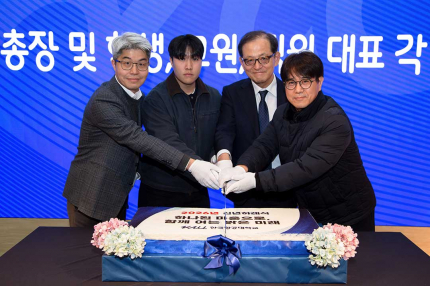
Korea Aerospace University Marks the Start of 2026 with New Year’s Ceremony
Korea Aerospace University (KAU) held its 2026 New Year’s Ceremony on the morning of January 5 at the university’s main auditorium, officially marking the beginning of the new year. Faculty and staff members gathered to exchange greetings and share the university’s mid- to long-term vision as well as key initiatives for the year ahead. Following university tradition, the ceremony began with participants exchanging handshakes and New Year’s well wishes. Members of the university community came together to greet one another, sharing the meaning of embarking on a new year collectively. The event then featured congratulatory video messages from distinguished guests, including Mayor Lee Dong-hwan of Goyang Special City, National Assembly Member Han Jun-ho, and President Lee Sang-cheol of the Korea Aerospace Research Institute. The speakers congratulated President Heo Hee-young on his reappointment and highlighted KAU’s role and achievements as a university closely connected to the aerospace industry. They also expressed hope that KAU would continue to play a meaningful role as a hub for aerospace research and talent development through collaboration with local communities, industry, and research institutions. In his New Year’s address, President Heo Hee-young shared his reflections on beginning a new term as the 10th president of the university. Looking back on the changes and achievements made over the past four years amid a rapidly changing higher education environment, he expressed his gratitude to faculty and staff for their dedication. He also reviewed key initiatives from his previous term, including campus environment improvements, academic structure reforms, institutional enhancements, and new projects. President Heo noted that these efforts have led to positive changes in campus culture, improved financial stability, increased admissions competitiveness, and higher student satisfaction. He emphasized that the rise in student satisfaction and renewed sense of pride among university members form an important foundation for strengthening KAU’s competitiveness. President Heo then outlined four strategic priorities for 2026. First, he emphasized curriculum reform to stabilize the flexible major selection system, aiming to realize meaningful interdisciplinary education through university-wide coordination following discussions at the college level. He also stressed the importance of educational innovation to proactively respond to AI-driven and digital transformation, as well as rapidly changing higher education environments. As the second priority, President Heo presented the vision of advancing into a global comprehensive aerospace university. He designated 2026 as a pivotal year for expanding global initiatives and announced plans to establish an internationalization task force to systematically enhance student exchange programs, joint research with overseas universities, and cooperation with international organizations. The third priority focused on expanding campus infrastructure. Addressing the increasing number of international students, trainees at aviation technology and safety education institutes, and the shortage of laboratory and practice spaces for graduate students, President Heo stated that the university would explore mid- to long-term solutions, including cooperation with local governments, to secure spaces suitable for education and research. Lastly, President Heo emphasized strengthening university promotion and external engagement to more effectively communicate KAU’s educational and research achievements and potential to academia, industry, government, and the international community. He also expressed plans to expand the university’s presence by actively supporting students’ participation in conferences, forums, competitions, and other external activities. Concluding his address, President Heo underscored that people are the university, noting that KAU functions properly only when professors, staff, and students each fulfill their roles. He also reaffirmed his commitment to continuously improving faculty and staff welfare. Following the New Year’s address, the ceremony continued with the introduction of senior administrators and a cake-cutting ceremony attended by the president and representatives of faculty, staff, and students, symbolizing unity and a hopeful start to the new year. After the event, commemorative rice cakes and gifts were distributed to attendees, and free tteokguk (rice cake soup) was served at the campus cafeteria during lunchtime, allowing all members to share in the spirit of the new year. The 2026 New Year’s Ceremony concluded as a meaningful occasion for the KAU community to reflect on past achievements, share future directions, and reaffirm their commitment to a new beginning together. Inaugural Address of the 10th President
2026-01-07



76, Hanggongdaehak-ro, Deogyang-gu, Goyang-si, Gyeonggi-do, 10540, Korea
Phone - +82-2-300-0114 FAX - +82-2-3158-5769 E-mail - webmaster@kau.ac.kr
COPYRIGHT 2022 Korea Aerospace University. All right reserved.