
Korea’s First Navy Pilot to Reach 10,000 Accident-Free Flight Hours: Alumni Park Ki-hyun Says, “Safety Comes Before Performance”
- 2026-11-04
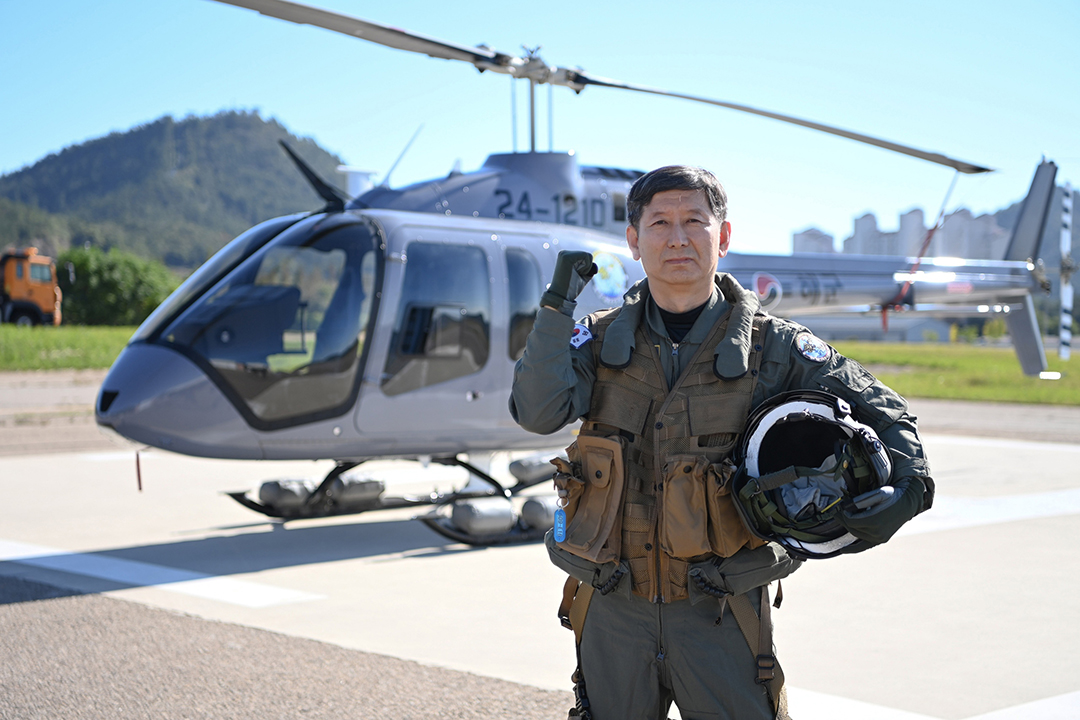
“What matters more than performance is compliance with rules and procedures.”
Ten thousand hours of accident-free flight and 34 years of flying experience. These are the words that alumnus Park Ki-hyun, a helicopter pilot who became the first in the Navy to achieve this accident-free record, emphasizes to his juniors. Every organization, school, company, and military unit has emergency manuals, but he has witnessed countless cases in which people, pressured to deliver results, failed to follow procedures and ultimately caused accidents.
A member of the Class of 1987 in our university’s Department of Aeronautical Science and Flight Operation, he was commissioned as an ensign in the Navy in June 1991 and began his career as a helicopter pilot the following year. After serving 19 years and six months on active duty, he retired as a lieutenant commander in 2010. In 2011, he was appointed as a civilian flight instructor for the military and went on to train 347 Navy pilots, 28 Marine Corps pilots, and three Air Force pilots. Even now, at the age of 59, alumnus Park continues to conduct training flights as a flight instructor with the 609th Education and Training Wing. We spoke with him through a written interview.
Q. On October 23, after completing the flight that brought your total to 10,000 hours, what went through your mind?
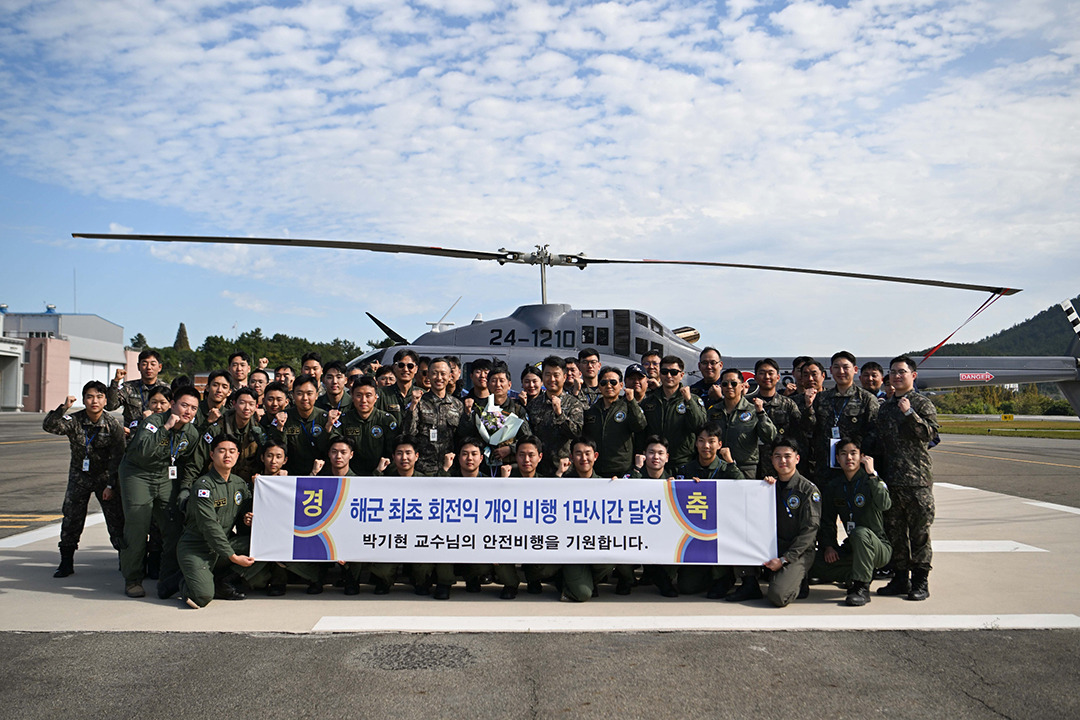
A. I thought to myself, “I really have been flying for a long time.” It was a great personal honor. I was also grateful that I had been able to fly this much because I had served in the Navy. I felt thankful to the many senior and junior colleagues, maintenance personnel, air traffic controllers, operations staff, and support-unit colleagues with whom I had worked over the years. Everyone in the unit came out to the apron that day to congratulate me.
Q. I understand that maritime flights have fewer visual reference points and involve many weather-related variables. Are there any principles or habits that have helped you maintain an accident-free record?
A. There is no special secret to safe flying that applies to all aircraft. You must conduct inspections before and after flights, check both the interior and exterior of the aircraft, and fly in accordance with the rules and procedures for each stage. However, you must be thoroughly familiar with the Flight Manual for the aircraft type you operate. You should devote sufficient time to preparations, such as assigning roles among mission pilots, and repeat cockpit procedures until they become second nature. Whether flying over land or sea, I recommend using all available navigation equipment and following the safest route that you have planned and are familiar with.
Q. I imagine there were moments when those principles were put to the test. What was the most memorable crisis during your 34 years of flying?
A. It happened at around 3:18 p.m. on February 3, 2005. While conducting a training flight in Pohang, the tail rotor of an ALT-III helicopter became uncontrollable over the skies above Guryongpo. Fortunately, we attempted an emergency landing on Runway 28 at Pohang Base and succeeded in making a running landing. The helicopter landed safely even though the tail rotor control cable had snapped and become wrapped around the aircraft. At the time, Asiana Airlines Flight 8335, which was approaching Pohang Airport, had to wait in the air. On March 9 of that year, I received the Chief of Naval Operations’ Weldon Award in recognition of my contribution to protecting lives and property.
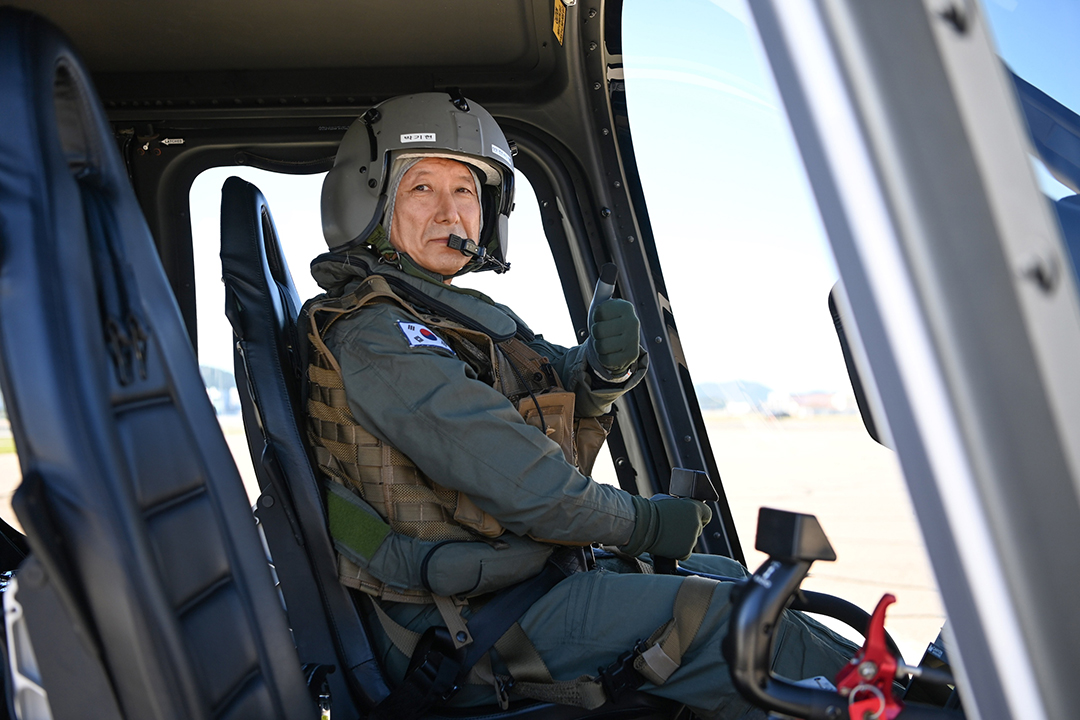
Q. Building on those experiences, you trained 378 pilots from the Navy, Marine Corps, and Air Force over 15 years. What do you emphasize most to your junior colleagues?
A. There are three things. First, they must establish a proper understanding of aircraft performance. You should think of an aircraft as being like a person. If atmospheric conditions are difficult for a person, they are difficult for an aircraft, too. That is why I emphasize the importance of understanding density altitude, which helps pilots predict weather conditions in which an aircraft may not be able to perform to its full potential. They also need to know the appropriate operating ranges for altitude, speed, and power for the aircraft type they fly.
Second, they must be familiar with the International Civil Aviation Organization (ICAO) Annexes, which serve as the rules of aviation. The foundations for aviation-related regulations and procedures in every country around the world, including aviation laws, enforcement decrees, enforcement rules, and official notices, are derived from the ICAO Annexes. Pilots must be able to look up anything they are unsure about and resolve their questions immediately.
Third, safety must come before performance. Every organization, school, company, military unit, and airport facility has emergency-response manuals. However, when I look at incidents and accidents, I have seen countless cases in which people, pressured to achieve results, failed to properly follow procedures and ended up causing accidents. What matters more than performance is compliance with rules and procedures.
Q. You are still conducting training flights at the age of 59. How do you manage your physical fitness and condition?
A. I do not smoke for the sake of my health, and I rarely drink alcohol. I walk for 30 minutes to an hour every day, and I also make a point of taking health supplements.
Q. Let’s go back to the beginning. I understand that, influenced by your father, who was a serviceman, you dreamed of becoming an officer in the Navy or Marine Corps. Why did you choose the Department of Aeronautical Science and Flight Operation?
A. At the time, for most students who wanted to become pilots, our university’s Department of Aeronautical Science and Flight Operation was the only department of its kind in Korea and therefore an essential choice. Even if someone dreamed of becoming a military pilot, I believed that choosing aeronautical science and flight operation as a major was the only path.
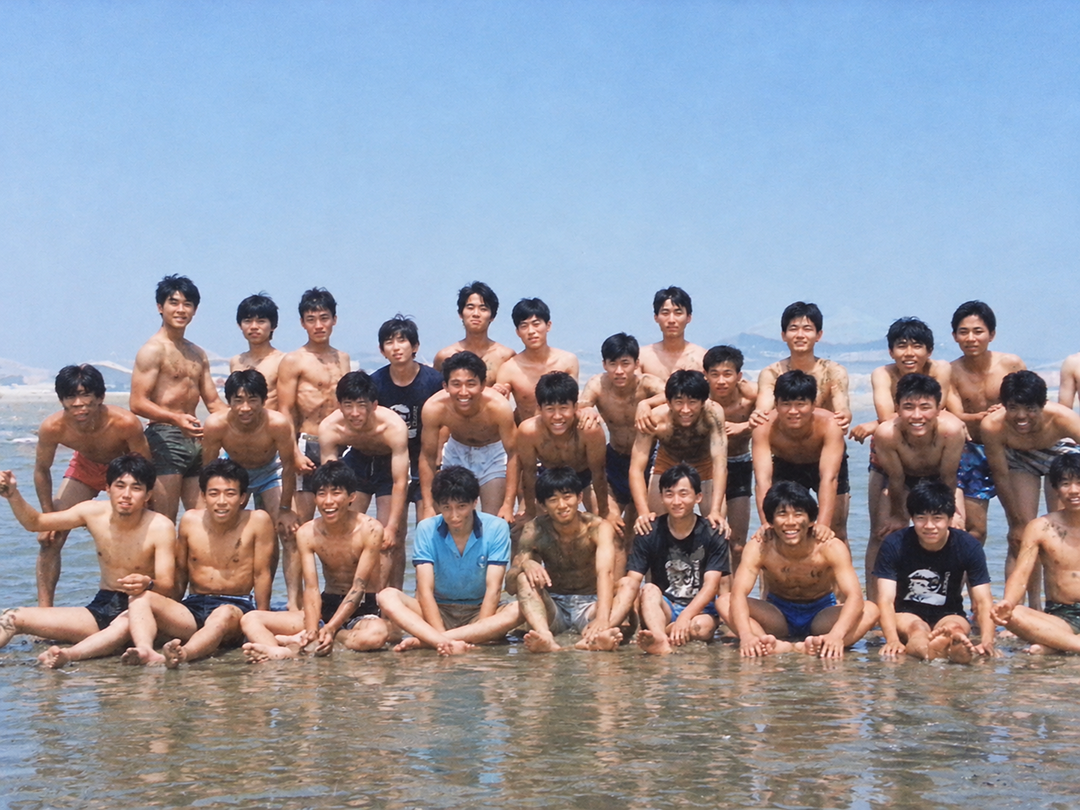
Q. What is your most memorable memory from your university days?
A. I remember being surprised by how large Gimhae Airport’s runway was when I landed there during a long-distance navigation flight. The runway was so wide that the entire Fuji FA-180 light aircraft fit within the runway centerline. I also remember staying at the university for intensive training during the summer vacation of my senior year in preparation for my solo flight.
But the most memorable moment was the day of my first solo flight. At around 8:30 a.m., in front of FIST, Professor Yoon Seung-jung got out of the aircraft and told me, “Go and make your solo flight.” I will also never forget the maritime training I did with Professor Shin Cheol-se.
Q. What led you to start flying and eventually pursue a career as a helicopter pilot?
A. At that time, most graduates of the Department of Aeronautical Science and Flight Operation gained flight experience in the military before moving into civilian aviation, and I chose the Navy. Around the time I was receiving flight training in the Navy, the Navy established a new in-house training program to train rotary-wing (helicopter) pilots, a program that had previously been entrusted to other military branches. I received personnel orders to join the training battalion’s rotary-wing pilot training course as the Navy’s second class of helicopter pilots. That is how I naturally began my career as a helicopter pilot.
Q. What advice would you give, as an alumnus, to juniors at your alma mater who dream of becoming pilots?
A. I do not claim to know everything about life, either. But if I were to offer some advice, I would tell them to think carefully about what they truly want to do. Once they have made a decision after serious consideration, they should take on the challenge with a detailed plan. I believe that juniors who want to become pilots already know very well what they need to do.
Ultimately, you need to objectively determine whether the work you want to do is also suited to your aptitude. And then take on the challenge with confidence

76, Hanggongdaehak-ro, Deogyang-gu, Goyang-si, Gyeonggi-do, 10540, Korea
Phone - +82-2-300-0114 FAX - +82-2-3158-5769 E-mail - webmaster@kau.ac.kr
COPYRIGHT 2022 Korea Aerospace University. All right reserved.