
Korea Aerospace University Holds Global Aviation Policy Fellowship Policy Roundtable with the Ministry of Land, Infrastructure and Transport
- 2026-08-24
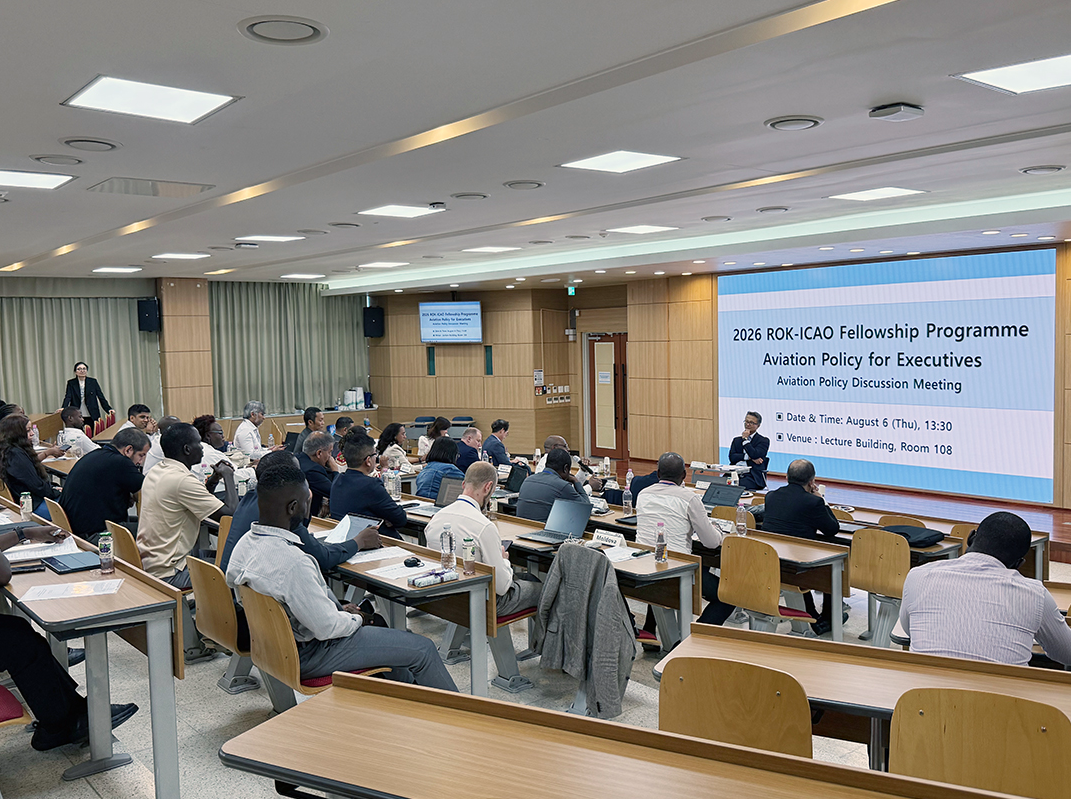
The Global Aviation Policy Fellowship Policy Roundtable, jointly hosted by Korea Aerospace University and the Ministry of Land, Infrastructure and Transport (MOLIT), was held on August 6 in Lecture Hall 108. The event brought together university and ministry officials, aviation policy officials from developing countries, and aviation experts to share their experiences and insights and discuss ways to expand aviation policy exchanges between Korea and developing countries.
A total of 15 senior government officials at the director and division chief levels from countries across Africa, Latin America, Asia, and Europe who are participating in MOLIT’s Senior-Level Aviation Policy Course attended the roundtable, along with 24 participants from the second cohort of Korea Aerospace University’s Global Aviation Policy Fellowship Program. Yoo Kyung-soo, Director General for Aviation Safety Policy at MOLIT; Kim Jin-gi, Dean of the Graduate School of Aviation Management; and Song Woon-kyung, Chair of the Department of Business Administration, also attended the event.
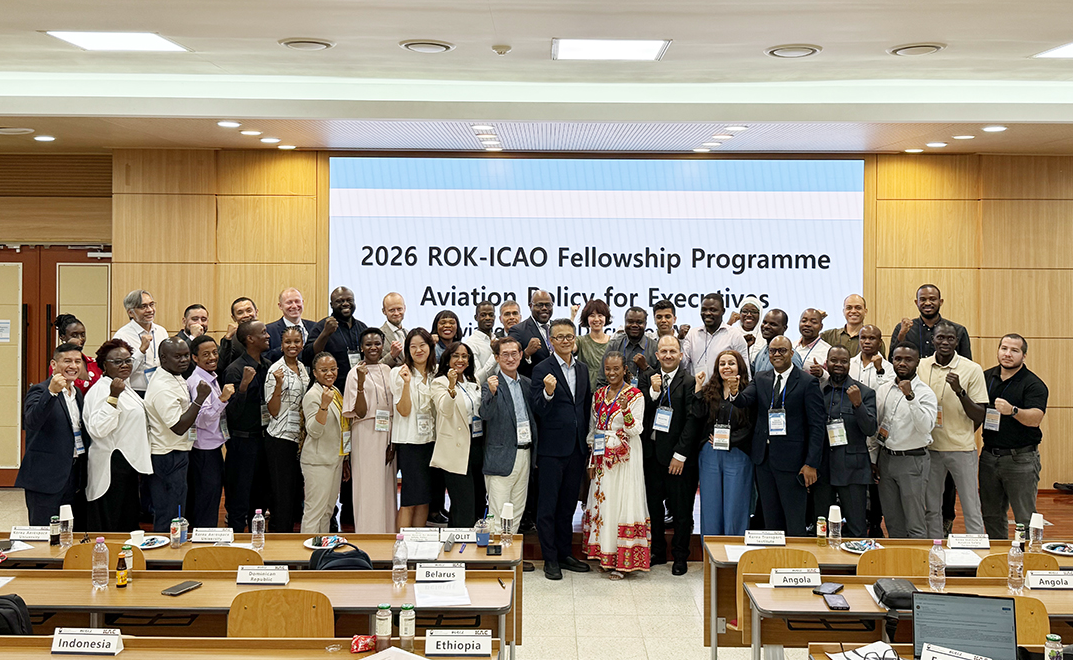
Director General Yoo introduced Korea’s major aviation policies and outlined the government’s future policy directions. Participants in the Senior-Level Aviation Policy Course then shared the current state of their respective aviation industries and the policy challenges they face, while the fellowship participants gave presentations on key issues in international aviation policy and opportunities for cooperation among countries. The roundtable provided a valuable opportunity for practitioners working in different policy and institutional environments to exchange their expertise and experiences, deepen their understanding of Korea’s aviation policies, and lay the groundwork for continued international policy cooperation.
The Global Aviation Policy Fellowship Program, which hosted the participants in the roundtable, is designed to cultivate aviation professionals who can contribute to the development of the aviation industries in developing countries. Targeting aviation experts from recipient countries designated by the OECD Development Assistance Committee (DAC) among ICAO member states, the program offers specialized training in the aviation and airport industries as well as a master’s degree program tailored to the needs of developing countries. The second cohort consists of 24 participants, including 19 from Africa, three from South Asia, one from Latin America, and one from the Middle East.
Korea Aerospace University will continue to work closely with aviation-related institutions in Korea and abroad to cultivate aviation policy experts from around the world and further expand its international aviation policy network.

76, Hanggongdaehak-ro, Deogyang-gu, Goyang-si, Gyeonggi-do, 10540, Korea
Phone - +82-2-300-0114 FAX - +82-2-3158-5769 E-mail - webmaster@kau.ac.kr
COPYRIGHT 2022 Korea Aerospace University. All right reserved.